

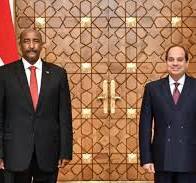
Recent reports indicate that Egypt is becoming increasingly involved in the ongoing conflict in Sudan, expanding its military and technical support to the Sudanese Armed Forces (SAF) led by General Abdel Fattah al-Burhan, particularly following recent battlefield developments in Darfur.
According to a report by Africa Intelligence, Cairo has intensified its support to the Sudanese army since the fall of El-Fasher in October 2025, a move aimed at helping the SAF reorganize its operations in western Sudan.
Egyptian Officer Killed in Sudan
The report revealed that Egyptian Brigadier General Ahmed Samir Abdel-Wahab Noor Al-Din, whose funeral took place on March 10, officially died during an operation related to securing Egypt’s southern border.
However, several sources — including Egyptian security officials, diplomatic contacts, and individuals close to Sudan’s Rapid Support Forces (RSF) — confirmed that the officer was killed inside Sudanese territory during a drone attack in the city of Kosti, south of Khartoum.
According to the report, the brigadier general and three Egyptian soldiers were conducting technical advisory work related to drone operations with the Sudanese Armed Forces when the location was struck.
Strategic Importance of Kosti
The city of Kosti hosts key military infrastructure used by the Sudanese army to support logistical operations and manage military activities across central and western Sudan.
Egypt has reportedly deployed military advisers and officers to assist the SAF in establishing a joint command and control center in El-Obeid, the capital of North Kordofan state. The area is considered strategically important in preventing the RSF from expanding toward the Kordofan region.
Preparations for New Military Offensive
The report also suggested that regional geopolitical developments — particularly tensions linked to the Iran-Gulf conflict — could create an opportunity for the Sudanese army to launch a decisive offensive against RSF positions in western Sudan.
The SAF recently regained control of Bara, the second-largest city in North Kordofan, on March 5. Military planners are now reportedly looking toward advancing on An-Nuhud and Al-Khuwayy in West Kordofan, as well as attempting to retake El-Fasher, which fell to the RSF in October 2025 after an 18-month siege.
Regional Support and Border Mobilization
The report emphasized that the success of such operations will likely depend heavily on military intelligence and logistical support from regional allies, including Egypt, Saudi Arabia, and Turkey.
Egypt has also raised its military alert level to the maximum along its southern border with Sudan, increasing troop deployments since early February as part of preparations for the expected escalation.
In addition, Egyptian intelligence chief Hassan Rashad reportedly visited eastern Libya in mid-February to meet with General Khalifa Haftar, commander of the Libyan National Army, to coordinate efforts aimed at preventing the transfer of weapons, fighters, or equipment into Sudan.
Analysts believe these developments highlight the growing regional dimension of Sudan’s war, with external actors playing increasingly significant roles in shaping the conflict’s trajectory.