

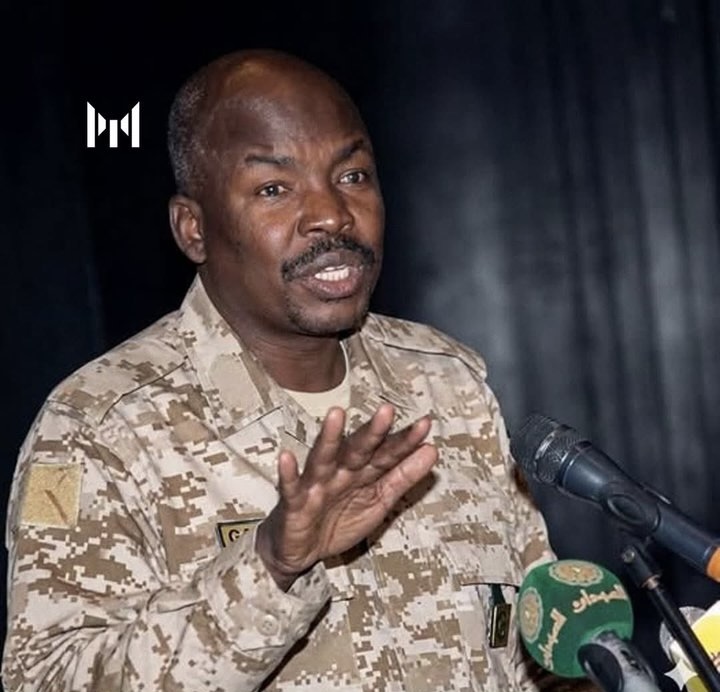
Kasla Gafar Al-Subki
The circulation of a recent image of Ahmed Mohamed Haroun, a fugitive wanted by the International Criminal Court (ICC), has once again sparked debate over his role in Sudan’s political and military landscape amid ongoing conflict and increasing speculation regarding his activities during the war.
Haroun remains one of the most prominent political figures associated with former Sudanese President Omar al-Bashir’s government. He is also one of four Sudanese individuals sought by the ICC on allegations related to war crimes and crimes against humanity linked to the Darfur conflict.
Over recent months, Haroun’s public presence significantly diminished, particularly as fighting intensified between the Sudanese Armed Forces (SAF) and the Rapid Support Forces (RSF). His absence generated numerous questions regarding his whereabouts and possible influence behind the scenes.
Reports and circulating sources claimed that Haroun was last seen in Kassala State in eastern Sudan, where he was allegedly involved in mobilization activities among Islamist groups and supporters. However, no independently verified confirmation has emerged regarding these claims.
Political accusations have increasingly surfaced concerning the role of individuals associated with Sudan’s former ruling establishment and the Islamic movement in influencing military and political decision-making during the war.
However, there is currently no independently verified evidence supporting claims that Ahmed Haroun “controls the war operations room” or acts as the “commander-in-chief of the armed forces.” Sudan’s military leadership remains officially under the country’s recognized military command structure.
In July of last year, Haroun broke years of media silence in an interview with Reuters — his first major media appearance in years.
During the interview, he outlined his vision for Sudan’s future political structure after the war, arguing that the military should continue to play a role in governance until security threats are eliminated.
Haroun stated that the National Congress Party and the affiliated Islamic movement envision a hybrid governing model in which the military would maintain sovereign authority while elected civilian leaders would administer government institutions.
He stated:
“We made a strategic decision not to return to power except through the ballot box after the war.”
He also added:
“The Western model is impractical in Sudan. We need to develop a model that recognizes the military’s role in politics.”
Those remarks generated considerable political debate in Sudan at the time, with many observers viewing them as an indication that figures linked to the former regime continued to seek a future political comeback.
The renewed focus on Haroun comes at a time when Sudan faces deepening political and security crises, with the ongoing war continuing to fuel accusations and counteraccusations over responsibility for prolonging the conflict and escalating violence.