
The prevalence of racist discourse in Sudan today, in its various manifestations, cannot be understood from a liberal perspective that reduces it to isolated individual deviations or considers it a passing “hate speech” or merely a byproduct of war. Rather, it must be read within the long history through which the modern Sudanese state was formed. The practice of slave trade, the highest form of racism, is exemplified by glorification of a slave trader and naming a street in the capital city, Khartoum after Al Zubair Pasha Rahama.
The denigration of the heroic strife and actions of the White Flag League from African descent and the “Memorandum” by a group of what called “ The Dignitaries of the People,” in which tribal leaders objected to slave abolition, represent a pivotal moment in its entrenchment and a blatant perpetuation of the system of slavery. The capitalist colonial system constitutes one of the most important factors that contributed to the construction of this state, and it used racism as an ideological mechanism to engineer and reshape social, economic, geographical, and cultural relations to service its goals of controlling material resources. In the context of colonial domination, racism was not an incidental phenomenon, but rather a fundamental element in the colonial management of tangible and intangible materials and resources, which redrawn tribal boundaries according to an essentialist, Orientalist logic. Through declared official policies and practices enshrined in local tribal institutions, such as native administrations (which were themselves quintessential colonial constructs), the colonial system produced and entrenched one of the most brutal systems of racial segregation in Sudan (1900–1948), not only between North and South, but also between overlapping social groups in western Sudan and the Nuba Mountains. The outcome of these policies was the production of antagonistic colonial dichotomies such as “Muslim-Christian,” “Arab/Black,” “Northern/Southern,” and “Slave/Free.” Instead of dismantling this colonial structure, post-independence regimes (both military and civilian) reproduced it through assimilationist cultural policies linked to political and economic interests. It adopted the same colonial center-periphery map, internalising ethnic discourse within the state’s ideological institutions (such as education and media) and violent institutions (such as security services). It invested in a divide-and-rule strategy to manage political conflicts and the unequal distribution of wealth and power by exacerbating the contradictions within the structure of tribal and regional relations. Ethnic identity became the organising principle of the concept of citizenship and belonging (for example, the question of “tribe” in national identification and citizenship documents). From this perspective, the current wave of racist rhetoric is a conscious or unconscious continuation of this colonial structural legacy, and a mechanism for redistributing power and wealth within a context of war, starvation, and displacement. The series of genocidal acts in western Sudan perpetrated by the Janjaweed militia, particularly in El Geneina, El Fasher, and Nyala, was driven by “identity-based killings,” and the heightening of separatist sentiments based on ethnicity and belonging to the center, are stark and bleak manifestations of the colonial structure of the Sudanese state.
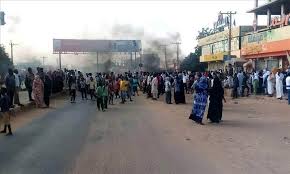
Our confrontation with racism and the ugliness of its rhetoric stems from our adherence to the slogans of the December Revolution and the sacrifices of our martyrs as they fell on the barricades, echoing the chants that denounced the arrogant practices of the racist regime and called for unity of all components of the country.
In light of this historical context of racism within the formation of the Sudanese state, we issue the following statement, which does not merely register a moral stance against racist rhetorics, but goes beyond “condemnation and denunciation” to acknowledge these practices, express our profound pride and respect for the victims and martyrs of Sudan, and work to dismantle the colonial structure of the Sudanese state and rebuild it on new and just foundations.
The position of the signatories to this statement against the rise of racist rhetoric is:
We, the signatories to the following statement, have followed and continue to follow with concern and indignation the unacceptable and condemnable rise in racist rhetoric, which is no longer limited to isolated individual invocations, but rather emanates from platforms, megaphones and social media websites directly and indirectly linked to the political and military entities with agendas at local and regional levels, which employ racism discourse as a tool in managing the war and sustaining power. This is evident in speeches and statements issued by individuals affiliate to the former regime, or by activists and organisations with direct ties to the forces dominating the military and political landscape in the country.
Statements by a member of the regime in Dalgo in north Sudan, articles by some female journalists close to the military members of the Sovereign Council, and recorded speech by the coup leader, Abdel Fattah al-Burhan, are just examples of the conscious use of racist rhetoric as a political-security strategy, not merely individual “slips.” This clearly indicates that we are facing a phenomenon deeply rooted in the structure of the state institutions, not an isolated gaffes or irresponsible utterances by individuals>
Racism is a crime condemned by all laws, earthly and divine. At its core, it reflects the criminality and moral and political depravity of its perpetrators. However, in the Sudanese context, it is not simply a matter of personal deviations, but rather a continuation of a historical structure that has made imagined ethnic, regional, religious, and linguistic superiority, an ideological justification for ruling the country and categorising-its people. More importantly, it is a manifestation of the inability of the racists to accept the worth of their victim and acknowledge their arguments, leading them to falsely denigrate their victim. From this perspective, all the human rights laws have denounced and criminalized racist speech’s and practices. We in Sudan, a country spanning hundreds of thousands of square kilometres, a nation encompassing diverse and complementary ethnicities, religions, and cultures heritages, have been and remain to be in dire need of stringent laws criminalising racist practices and hateful rhetoric, and a duty to dismantle the institutional foundations that permits and sustain thus practice within the state apparatus, education, media, and legal systems.
A careful examination of the entities, timing, and individuals who instigate this criminal actions, clearly reveals that this recurring and deliberate escalation is a politically motivated construct, aimed at adding fuel to the wagering fires consuming our nation now. It is a tool consciously employed to actualise a situation where the political secession, planned by external and internal forces, an inescapable reality, even an acceptable one, due to the heightened racial sentiments filled with hatred and animosity.
This racist agenda is not an incidental aspect of the ongoing war, but rather a decisive and central tools for redrawing the political and economical map of Sudan along ethnic and regional lines.
We, the undersigned forces, fully aware of the foregoing malicious schemes being implemented and orchestrated by the de facto authorities, and forces aligned with them in this criminal war—schemes that aim, among other things, to divide the country, power, and resources, and sell them off to states and powers that supply them with weapons, recognition, and political cover—declare that we are working and will continue to work together, united, each from their own independent position and platform, to defeat these narratives and plans, and to hold accountable all those who have committed crimes against our people, or any part of them, whether through war or incitement of hatred. Starting with political and media confrontation with those who raise it, and reaching legal campaigns internally and externally to ensure that the maximum penalties are imposed on them, through campaigns aimed at promoting and clarifying the interests of Sudanese people in living in dignity, and preserving the unity of the country in terms of land and conscience, and through a long-term struggle to dismantle the legal, administrative and symbolic structure that made ethnic and tribal affiliation an implicit condition for citizenship and belonging.
The signatory forces to the memorandum:
1. Radical Change Forces’ Alliance
2. THE UNITED SUDANESE REVOLUTIONARY FORCES ABROAD
3. SUDANESE AMERICANS DEMOCRATIC TRANSITION -SADT)
4. THE REVOLUTIONARY CHARTER FOR ESTABLISHING PEOPLE POWER
5. SUDAN LINGUISTIC CIRCLE
6. DARFUR BAR ASSOCIATION
7. SUDANESE GROUP FOR DEFENDING RIGHTS AND FREEDOM
8. ASSOCIATION OF THE SUDANESE ABROAD IN SUPPORT OF THE UPRISING.