السودانية نيوزنعمل علي نقل الاخبار والاحداث في الساحة السياسية السودانية ودول الجوار العربي والافريقي العالمي بمهنية صحفية عالية و بوضوح وشفافية . ونعمل علي احترام حقوق النشر والتعبير وترسيخ مبدا الحرية والديمقراطية وحقوق الانسان وفق المواثيق الدولية
UN: Kordofan Epicenter of Sudan Conflict, 80% of Civilian Deaths Caused by Drone Strikes
GENEVA:Alsudanianews
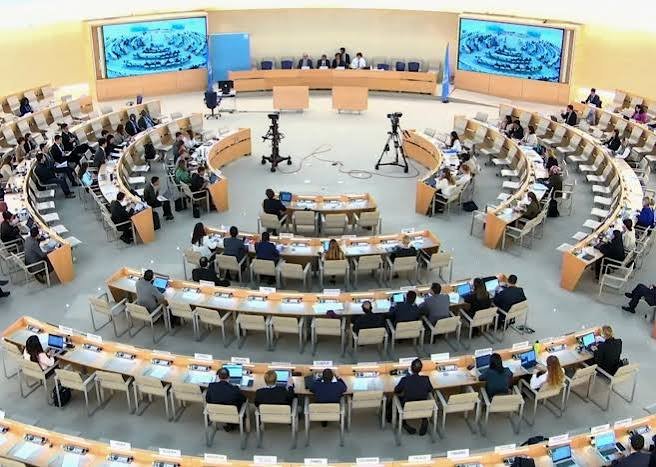
The people of Sudan need protection, justice and sustainable peace, Deputy High Commissioner for Human Rights Awa Dabo told the Human Rights Council, revealing that her office documented at least 1,120 civilian deaths from drone strikes across Sudan in the first six months of 2026, accounting for 80 percent of all civilian deaths documented.
In a briefing obtained by (alsudania.news), Dabo said the Council met on 3 July to urge immediate action to protect civilians in light of the deteriorating situation in El Obeid in North Kordofan state.
Since then, there have been signs that international pressure has helped to make a difference on the ground.
Drone strikes in El Obeid city decreased sharply in July, offering some relief to civilians who had endured months of fear and deprivation.
However, civilians in El Obeid are still living in dire conditions and face grave risks.
Repeated drone strikes on gas stations, water and electricity infrastructure have left families struggling to access safe water, food and medical care, as prices soar.
In the first six months of 2026, our Office documented at least 1,120 civilian deaths as a result of drone strikes across Sudan, accounting for 80 per cent of all civilian deaths we documented.
The Kordofan region remains the current epicentre of the conflict in Sudan. The majority of civilian deaths documented by our Office to date in 2026 were recorded in the region.
Hostilities have intensified in areas to the north of El Obeid as the Sudan Armed Forces and the Rapid Support Forces have battled for control over key supply routes linking North Kordofan to Khartoum and Darfur.
In August, ground hostilities resumed to the south and west of El Obeid, restricting access to a key water source for the city.
People fleeing intensified fighting are moving towards El Obeid, straining limited resources and, in some cases, fuelling mistrust towards new arrivals.
In South Kordofan, clashes between the RSF-affiliated Sudan People’s Liberation Movement-North and the Otoro community in Kauda have led to casualties and displacement.
We are deeply concerned about ongoing attacks on humanitarian personnel and assets. This includes the detention of humanitarian workers by the SPLM-North, the looting of a warehouse in Kauda, and the aerial strike outside Dilling that destroyed World Food Programme trucks carrying aid.
We also sound the alarm about the sharp increase in hostilities in Blue Nile state, as the RSF and SPLM-North announced the capture of Kurmuk and Geissan along the border with Ethiopia.
In North Darfur, RSF ground incursions and drone activity in the Dar Zaghawa area have triggered further displacement.
As civilians flee conflict and insecurity, they continue to face summary killings, sexual violence, other physical violence, arbitrary detention, abductions and looting.
Tensions between communities are deepening, fuelled by hate speech. In some areas, the defection of RSF commanders and shifting alliances are fuelling inter-communal violence.
The High Commissioner’s designated expert discussed a proposal for confidence-building measures with the authorities just last week, and we hope this dialogue will contribute to meaningful measures to protect civilians.
This horrific war has been fuelled by interests both inside and outside the country.
Yesterday, the Independent Fact-Finding Mission on Sudan briefed this Council on its findings that foreign powers and entities have supplied weapons and other military support.
Meanwhile, as our own report earlier this year set out, domestic and external players are exploiting the country’s rich natural resources, from gold to gum arabic.
The ultimate price is being paid by the Sudanese people.
The international community must act to end the transfer of arms to the parties used in manifest disregard of the obligation to protect civilians.
And as long as perpetrators of human rights violations face no consequences, the violence will continue. States need to use every available tool to ensure justice for victims, including through universal jurisdiction,and to fully support the International Criminal Court’s mandate with respect to accountability for crimes committed in Darfur.
Finally, sustained international efforts are needed to secure a permanent ceasefire and support a transition to inclusive civilian rule.
The people of Sudan need protection, justice and sustainable peace.