
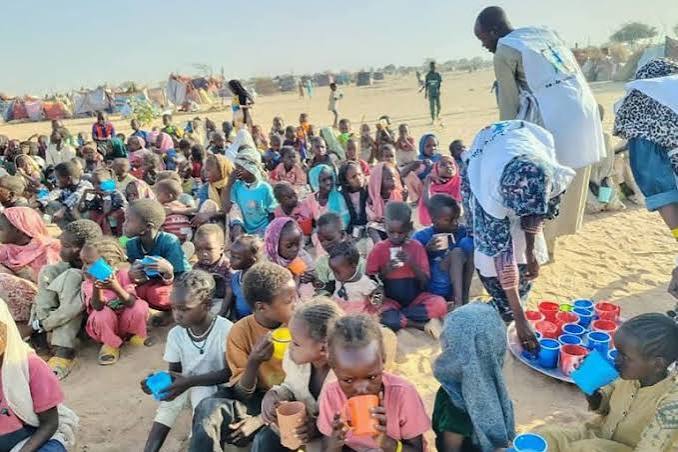
General Coordination of IDPs: Sudan on Brink of Famine – 19.5 Million Face Hunger, 306 Civilians Killed by Drone Strikes in October
Golo – The General Coordination for Internally Displaced Persons and Refugee Camps in Sudan said in a press release issued on 25 October 2026 from Golo, that Sudan is on the brink of famine, with lives caught between the inferno of war and the specter of hunger.)
The Coordination said
Today in Sudan, civilians no longer face death under bombardmen alone; they are trapped between the gunfire of war and the threat of death by starvation.
Cities are being destroyed, families are being displaced, and millions of people are struggling for a morsel to keep body and soul together, while the very foundations of life are eroding and the prospects of survival are receding day by day. This is a catastrophe that exceeds the limits of human endurance and places the international community before a moral and legal responsibility that brooks no delay. Yet the Sudanese people face a fate that no people on Earth should ever be left to confront alone.
The General Coordination for Internally Displaced Persons and Refugees in Sudan continues to follow with grave concern the joint statement issued by 32 international bodies concerning the humanitarian situation in Sudan on 23 October 2026- led by the United Kingdom, the United States of America, the European Union, France, Germany, Italy, Canada and Norway -highlighting that 19.5 million Sudanese were facing acute food insecurity, including 5 million in the emergency phase, amid growing risk of famine over the coming months. The statement further underscored that, the ongoing war is the principal cause of this crisis, held the two belligerent parties to the conflict primarily responsible for the suffering of civilians, called for an immediate end to the obstruction of humanitarian assistance and the protection of civilians and their livelihood.
These developments come as the United Nations High Commissioner for Human Rights, Volker Turk, announced that 306 civilians were killed and hundreds of others injured between 1 and 21 October, 2026 by drone strikes attributed to the Sudanese Armed Forces (SAF) and the Rapid Support Forces (RSFs). These attacks struck residential areas, markets, healthcare facilities and other civilian infrastructure-reflecting the widening scope of risks threatening civilians’ lives and undermining the very foundation of their survival.
These figures reveal a tragic reality in which the repercussions of war intertwine with the collapse of livelihoods and the disruption of lifesaving services, imposing even heavier burdens on the internally displaced communities, refugees, pregnant and lactating women, children under five, older persons and the most vulnerable groups generally. Continued mass displacement, soaring prices of essential goods, the loss of income sources and difficulty accessing health services and adequate food are pushing millions of families to unprecedented levels of destitution and insecurity.
The General Coordination stresses that protecting civilians is inseparable from ensuring their right to food, water, shelter and medicine and their right to live in dignity. The ongoing war, together with the obstruction and denial of humanitarian relief, is deepening the catastrophe and threatening further avoidable loss of life. The response must therefore go beyond rhetorical statements to concrete action that places the lives of the Sudanese people above military and political calculations.
The continuation of the war means more lives under threat and more families deprived of the most basic necessities of life. It is no longer acceptable that the suffering of the Sudanese people should remain hostage to procrastination or political wrangling, even as the prospects of survival diminish and the circle of need expands.
Accordingly, the General Coordination for the Internally Displaced Persons (IDPs) and Refugee Camps in Sudan calls for the following: –
- An immediate cessation of hostilities and the establishment of a humanitarian truce of at least 90 days, as step toward a permanent ceasefire and an end to the suffering of civilians.
- The opening of all humanitarian corridors without restriction or impediment and ensuring the delivery of food and medical assistance to all affected populations, particularly displaced persons, refugees and communities at risk of famine.
- Protecting civilians and their means of survival, halting attacks on residential areas, markets, healthcare facilities and water sources, and holding those responsible for violations accountable.
- Urgent and effective international action to mobilize additional humanitarian funding, halt the flow of weapons to both parties to the conflict, and support a credible political process that leads to a just, lasting and sustainable peace.
Finally, the General Coordination calls upon the international community, the United Nations, the African Union, the IGAD, the international humanitarian organizations, and donor agencies to intensify their political, diplomatic and humanitarian efforts, ensure that the necessary resources are made available to meet growing needs, and bring serious pressure to bear on the parties to the conflict to cease hostilities and guarantee humanitarian access to all affected people, without discrimination or exception.
The salvation of Sudan begins with silencing the guns, guaranteeing unimpeded humanitarian access, holding perpetrators of violations accountable and putting human life and dignity above all else.
Adam Rojal
The Official spokesperson for the Internally Displaced Persons(IDPs) and Refugees in Sudan.