


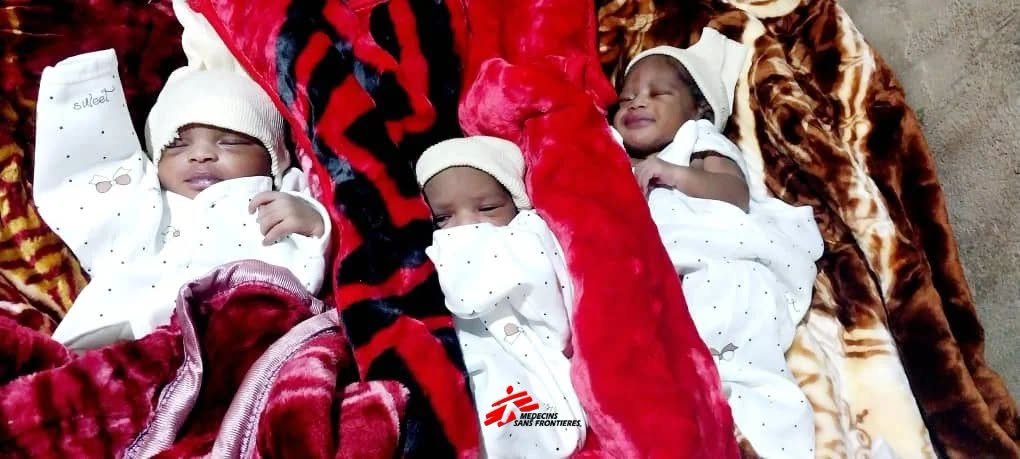
A Surprise Arrival: Triplets Born with MSF Support in in Umo, Central Darfur
Alsudanianews :Umo
When 36-year-old Rahima Abdullatif went into labour on 28 September 2026, she was expecting twins. Instead, she gave birth to three girls: Warda, Zohor and Zahra.
The babies were born at the MSF-supported Umo Primary Healthcare Centre in northern Jebel Marra, Central Darfur, Sudan. It was the first triplet delivery handled by the medical team in Médecins Sans Frontières (MSF)’s Rokero project. Each baby weighed around two kilograms at birth.
Rahima lives in Umo Foug, a mountain village about two hours’ walk from Umo. She had no idea she was carrying triplets until the day her daughters were born.
Caring for three newborns brings challenges alongside the joy.
With support from her mother and sister, Rahima is raising her daughters, while MSF helps ensure they receive adequate nutrition through regular monitoring and infant formula.
The delivery was equally memorable for the medical staff. According to the project coordinator, the midwives were anxious until they knew all three babies were safe. They then burst into tears of relief. The team also acknowledged the training and support received from MSF, which helped them manage the delivery.
In northern Jebel Marra, accessing healthcare can be a major challenge, particularly for pregnant women. A journey of just 25 to 30 kilometres can take four hours, while some women must walk for up to seven hours to reach a health facility.
Through its Rokero project, MSF supports Rokero Hospital and two primary healthcare centres, including the one in Umo, as well as a network of community health workers and midwives in villages across northern Jebel Marra.
The project targets an estimated population of 580,000 people, providing support for maternity and antenatal care, delivery services and local healthcare workers.
In this conflict-affected region, MSF health promotion teams also travel to remote communities, sometimes staying overnight. Their work includes health education, disease surveillance, vaccination support, identifying and referring people with malnutrition, and helping pregnant women access healthcare and referrals.
For Rahima and her three daughters, continued access to care matters well beyond the day of delivery.