

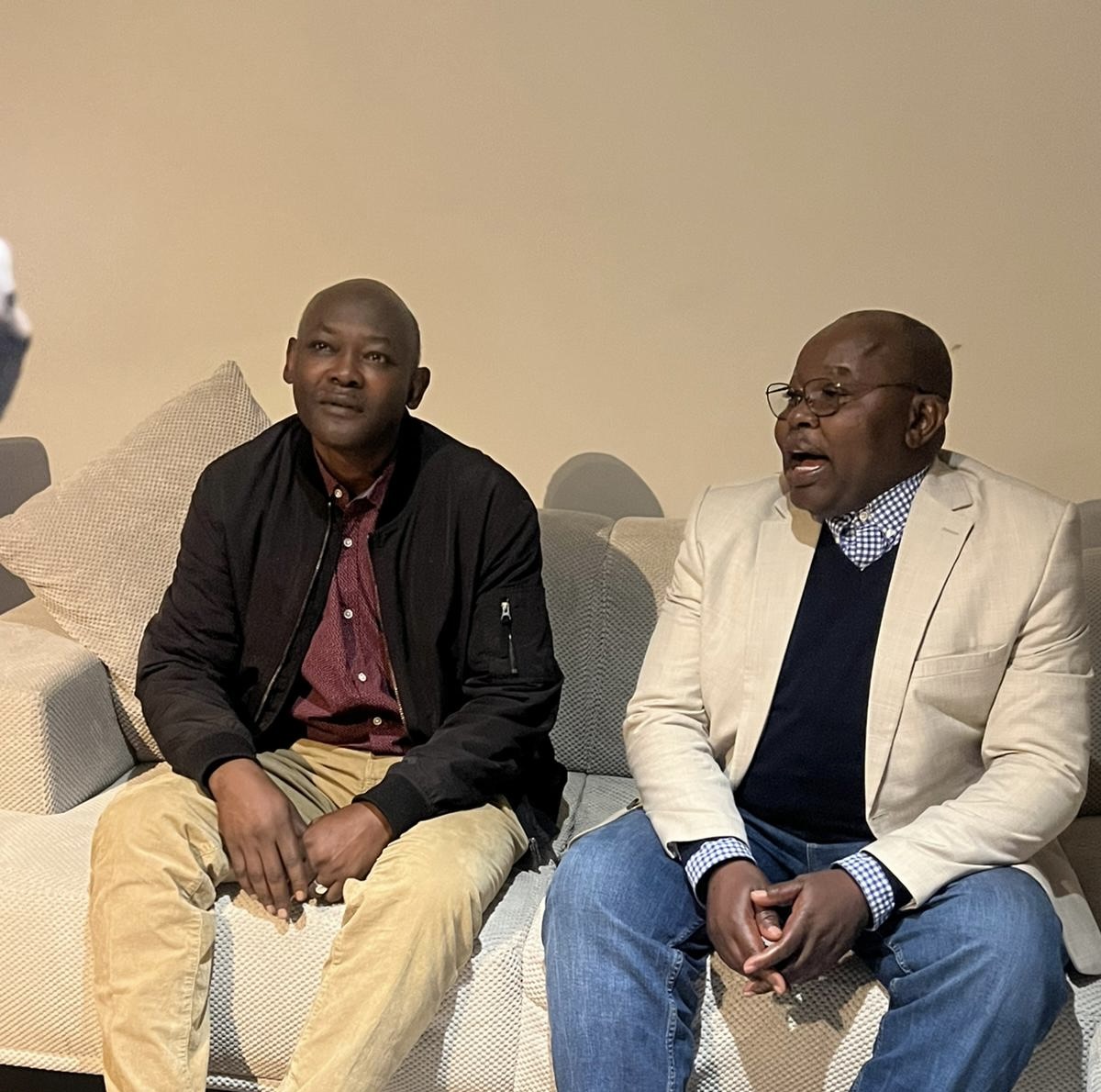
Interview conducted by:Gafar Alsabki Ibrahim
Six millions plus IDPs shelter in areas under our protection, the humanitarian gap is overwhelming and far beyond our meager capabilities
Reconstruction after war : how the EU can most effectively support Sudan’s next chapter
Broad- based, national, civilian –led front, comprehensive dialogue, addressing the root causes, civilian rule, Al Nour outlines a roadmap to end Sudan’s crisis in EU consultations
There must be no impunity for any perpetrator – starting from al Bashir to the ongoing warlords
Beyond aid: the strategic role of the EU in Sudan’s political stabilization
SLM’s message to Europe: support homegrown peace, not externally imposed solutions
From Sudan to Brussels, SLM chairman seeks global support to bring speedy end to the war and realize equal citizenship rights
Sudania news conducted an in-depth interview with Abdul Wahid Mohammed Ahmed Al Nour, chairman of the Sudan Liberation Movement, exploring the motivations behind the movement’s recent tour of several European countries and its meetings with senior European Union officials. The discussions also examined Sudan’s rapidly deteriorating humanitarian and political conditions, as well as the movement’s roadmap toward a comprehensive solution.
Q: Despite hopes for de- escalation, the war in Sudan shows no signs of improving. Fighting persists, displacement continues to rise, and an overwhelming numbers of civilians are seeking refuge in areas under your movement’s control, particularly around Tawila and deep into Jebel Marra. In this context, what motivated your visit to the European Union?
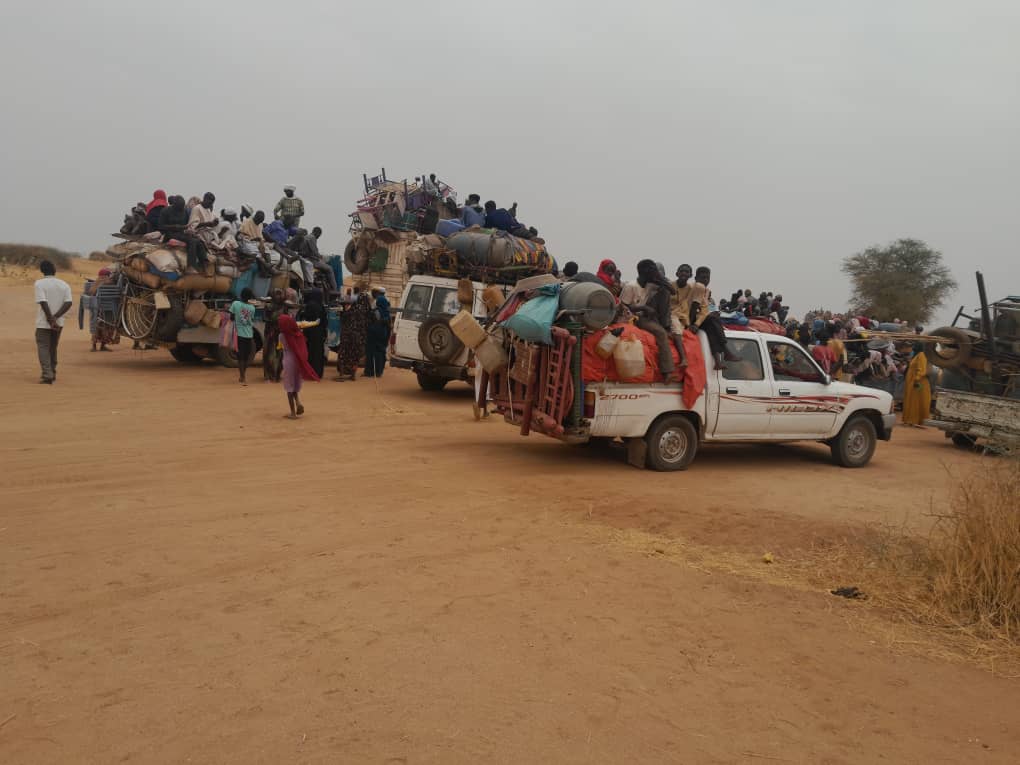
A: Thank you, and welcome. As you know, displacement in Sudan has reached unprecedented levels. Many people have fled to Tawila in North Darfur due to its proximity to the state capital El Fashir, which has become an active frontline between the Sudanese Armed Forces and the Rapid Support Forces. As a result large numbers of families have sought refuge in Jebel Marra- the only one safe heaven area in Sudan which was not affected by the ongoing conflict.
Our visit sought to engage the European Union on Sudan’s ongoing ordeal and to convey our perspective of the country’s catastrophic humanitarian situation. We believe we are uniquely positioned to do so because we have maintained strict neutrality throughout the conflict – a stance that has come at an immense cost. More than six million displaced people have sought refuge in areas under our control. Drawn by the utmost safety from airstrikes, drones, shelling, snipers and front-line fighting.
During our meetings, we outlined the humanitarian catastrophe, Security, and political realities on the ground and shared our vision for a path out of Sudan’s crisis. We also emphasized our commitment to work in concert with other political forces and resistance groups towards sustainable solution to the crisis.
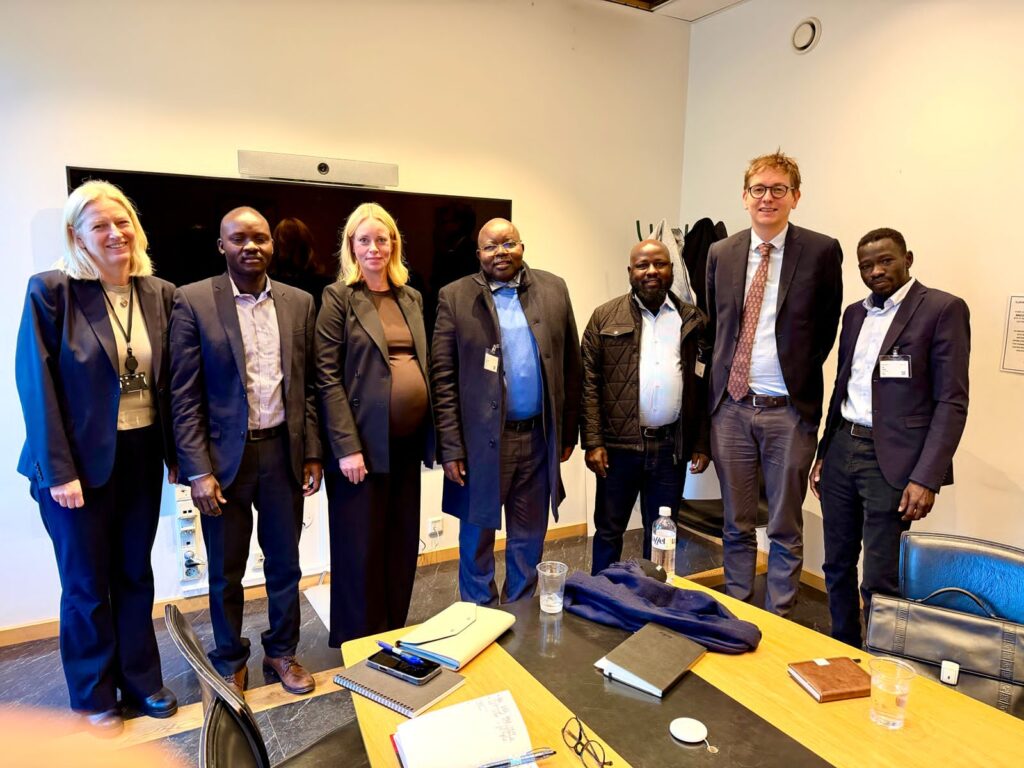
Q: During your recent mission to Italy, Geneva, Brussels, France, and other European capitals, your delegation engaged in a series of high-level meetings .Beyond the immediate humanitarian emergency, what were the key issues on the agenda?
A: In each of these countries, we engaged with senior government officials, exchanged views, and most importantly, communicated the full magnitude of the humanitarian catastrophe unfolding not only in areas under our control, but a cross all of Sudan. The Sudanese people are enduring what has increasingly become a “forgotten war” and they deserve sustained attention and meaningful support from the international community.
We also held in- depth discussions on the evolving political landscape and presented our broader vision for a comprehensive resolution to the conflict, in coordination with other Sudanese stakeholders. We underscored that any resolution must be genuinely Sudanese –led, conducted through a comprehensive Sudanese- Sudanese dialogue that is open, transparent and inclusive. Such a process should enable all parties to freely articulate their views and propose solutions without coercion. We noted that the conflict has engulfed the entire nation – from the Nuba Mountains, Blue Nile, Darfur, Kordofan, the Eastern regions, including the national capital, Khartoum. Serious atrocities and grave violations have been documented, including the violent dispersal of the peaceful sit- in at the Army General Headquarters, among other heinous crimes. These incidents must be thoroughly investigated, and perpetrators must be held fully accountable.
We briefed European Union officials on the situation on the ground, covering developments from Port Sudan in the east and Al Geneina to the west, and extended to the Libyan and Chadian borders. We presented our assessment of the rapidly deteriorating humanitarian landscape based on the firsthand information we have and our understanding to the evolving dynamics.
The Sudanese population has been thrust into an inferno of a relentless and devastating conflict, while regional and international attention remains gravely insufficient and everybody pretend amnesia. Children are severely malnourished and traumatized, large segments of the population require urgent psychological support, counseling, and long- term rehabilitation. The collapse of education and security systems across the country is profound and deeply alarming. Given the magnitude of the national crisis, we believe the moment has come for all stakeholders to think deeply and seriously with clarity and responsibility.
We discussed the situation in our liberated territories, for which we bear primary and direct responsibility. Our deliberations focused extensively on the conditions of children, women and the elderly, and persons with special needs, as well as the severe challenges they continue to confront. Despite overwhelming shortages of food and non- food items, medicines, and other essential supplies, we are pursuing short, medium and long term solutions. The Sudanese population is enduring an unfathomable humanitarian crisis and is in urgent need of substantial and sustained humanitarian assistance.
Q: During your meeting with the European Union, particularly with the EU’s humanitarian commission, a package of decisions was adopted, including an increase in humanitarian assistance for Sudan. What is your comment on this development?
A: The recent initiative by the European Union’s humanitarian commission constitutes a commendable and deeply appreciated step. It reflects a clear recognition of the gravity and the scale of the humanitarian crisis unfolding in Sudan. The needs remain vast and require substantial financial resources, and it is our hope that international, regional, and individual efforts will intensify and succeed in addressing them.
Our principal expectation is that the allocated funds will reach the individuals and communities most acutely affected, rather than being disproportionately absorbed by administrative overhead, as has too often been the case.
Q: In light of your discussions, what measures can the European Union adopt to more effectively strengthen its humanitarian support aimed at addressing the escalating humanitarian crisis?
A: The European Union possesses substantial experience in responding to humanitarian emergencies – from the Balkans and Ukraine to the Caribbean, Africa, and other global hotspots. This extensive expertise has positioned the EU as a key partner in addressing complex crises. During our consultations with the European Union, the European Commission for Humanitarian Aid, and several individual member states, we underscored the urgent and immediate needs of Sudanese civilians who have been displaced by the conflict, whether they remain inside Sudan or have sought refuge in neighboring countries.
We are confident that our message was conveyed clearly, reflecting all the, vision, concerns and perspectives previously articulated. We endeavored to provide the EU with all available information regarding the realities on the ground. It is therefore our hope that this engagement will contribute to a meaningful and sustainable response- one firmly anchored in stopping and ending the war, establishment of a genuine transition towards democracy in Sudan, and the facilitation of an inclusive national dialogue that brings Sudanese actors together to overcome deep- seated divisions, grievances and violence.
Addressing these challenges requires concrete, actionable measures rather than rhetorical commitments. We trust that the international community and the EU in particular, will support efforts that lead to a just, comprehensive and lasting solution.
Q: It is understood that you have presented a comprehensive vision for addressing the Sudanese crisis to the European Union. Could you elaborate on the Sudan Liberation Movement’s roadmap for resolving the conflict, and outline the avenues through which the European Union may effectively support its implementation?
A: Indeed, the movement has presented a comprehensive vision to the European Union – both to its Humanitarian Commission and to the individual Member States we have engaged with. Our central message is that sustainable peace in Sudan cannot be achieved without an inclusive national dialogue that confronts the historical root causes of the Sudanese crisis. This requires providing clear and definitive answers to the long- standing unresolved questions that have caused successive wars, particularly those relating to the relationship between religion and the state, equal citizenship, and the continued monopoly of power and wealth in the hands of a single group since independence.
It is imperative that the people of Sudan finally have the opportunity to build a state founded upon the principle of equal citizenship. Such an outcome can only emerge through deep, courageous, and honest dialogue among all Sudanese.
In our discussions with the European Union, we conveyed our position without ambiguity: the time has come for all international actors to support the Sudanese people by facilitating their efforts to establish a broad-based, national, unified, civilian-led front. This platform must be inclusive and operate in a transparent manner, and brings together all the political parties, armed revolutionary movements, civil society groups, , women’s and youth groups, representatives of the native administrations, Internally Displaced Persons, Refugees, and independent national figures with long and an impeccable track record of principled opposition to authoritarian rule.
Its purpose would be, to restore the components and objectives of the December glorious people’s revolution and agree upon the foundational criteria and mechanisms for the Sudanese –Sudanese dialogue that will address the root causes of the Sudanese crisis. We have emphasized that disputes should no longer be settled through arms, but through the exchange of ideas – this, we believe, is the path to a lasting solution. Such a process must be driven by genuine Sudanese will and Sudanese efforts.
We also welcome the recent statement issued by the QUAD, which could serve as a constructive basis for a comprehensive and enduring resolution – provided that all parties commit to its principles and implement them faithfully. Ultimately, however, any viable settlement must be Sudanese-led and Sudanese – owned. Past initiatives driven from outside failed precisely because they did not arise from a genuine Sudanese efforts and consensus. This time, we must ensure that the process is rooted in true national ownership, and we are confident that, if this principle is upheld, a successful and sustainable solution is within reach.
Q: The situation in Darfur has become increasingly precarious following the Rapid Support Forces’ capture of El Fasher, amid serious allegations of war crimes and mass atrocities. Prior to the outbreak of the fighting in the city, you introduced an initiative concerning El Fasher which was strongly rejected by certain parties to the conflict. There are now widespread assertions that armed groups fighting alongside the Sudanese Armed Forces – particularly the Minni Minnawi Movement- have been involved in these violations, including allegations that weapons were distributed to civilians to draw them into the fighting. How do you respond to these claims?
A: Mr. Alsabki, such questions evoke profound sadness and concern. The large-scale violations and atrocities were entirely preventable, and their occurrence underscores the consequences of leadership that fails to prioritize the national interests over personal and narrow organizational interests, and have slightest concern for the safety of the death-threatened civilians. Regrettably, some actors involved in the conflict are driven by ill intentions, often seeking to shift blame onto innocent civilians. This war is frequently propelled by emotion rather than reasoned judgment, with no regard at all for the human suffering they cause. This reality is both deeply distressing and unacceptable.
On July 2024, we launched an initiative aimed at protecting civilians and facilitating the delivery of humanitarian assistance in El Fasher. The core of this initiative called for the withdrawal of all armed forces from the city and the transfer of security responsibilities to the neutral self- defense units of the Sudan Liberation Army. We proposed that El Fasher be designated a demilitarized zone, to enable the protection of civilians and the unhindered delivery of humanitarian assistance to those facing imminent threats from violence, hunger, and disease.
Our vision was El Fasher to serve as a central hub for coordinating humanitarian efforts across Darfur, Kordofan, White Nile, and Al-Jazeera. If this model proved successful in El Fasher, we believed it could be replicated in other regions of Sudan. This initiative prioritizes national interest over personal or narrow organizational agendas, placing the safety and dignity of Sudanese citizens at the forefront.
We called upon the United Nations, the European Union, the United States, and the United Kingdom, the African Union, the League of Arab States, neighboring countries and all national entities to support this humanitarian initiative. Sadly; there remains some leaders from the warring parties for whom human life and dignity are secondary considerations. As the saying goes, “How can a building ever be completed if some are constructing it while others are tearing it down”.
Regarding the perpetrated crimes, it is undeniable that all parties involved in the conflict has committed violations. We earnestly hope for an end to such crimes in Sudan, and we emphasized that all individuals responsible for mass atrocities against innocent civilians must be held accountable. The principle of ‘ No impunity” must be applied universally, beginning with former president Omer Al- Bashir and extending to all individuals indicted by the International Criminal Court (ICC) for genocidal crimes committed under his regime.
The Sudanese people have endured ravages of war since independence, and today, even areas previously untouched by conflict are threatened. We firmly believe that the time has come for all Sudanese citizens to unite in ending these cycles of violence, ensuring that future generations may live in peace, security, and dignity, free from the tragedies that have long afflicted our nation.
Q: Regarding the perpetrators of war crimes and mass atrocities in Sudan, including the former head of state, Omer Al Bashir, and the ongoing calls for their handover to justice, the European Union has issued a statement urging Al Burhan government to cooperate with the International Criminal Court, Based on the high- level meetings you have participated in, how would you comment on this matter?
A: Everyone is aware that the International Criminal Court is headquartered in the Hague, in the Kingdom of the Netherlands, within the European Union. Its location and mandate enable it to effectively support international, regional and national efforts to ensure that perpetrators of grave crimes are brought to justice. As a movement, we remain unwavering in our commitment to accountability for all individuals responsible for atrocities and war crimes in Sudan – including our own members of the movement .I have repeatedly stated that should I, as the chairman of the movement be found to have committed any crime, I am fully prepared to submit myself to due process and face justice in the Hague accordingly.
In light of the current situation – particularly in the absence of a credible and functioning judicial system in Sudan- we are calling for the establishment of additional tribunals endowed with the same international jurisdiction, legitimacy, and mandatory enforceability as the ICC. Such mechanisms are essential to ensure that those responsible for atrocities committed against the Sudanese people throughout the country’s successive conflicts, including the ongoing war, are held to account. Only through robust and impartial international justice cans the cycle of impunity be broken and the Sudanese people be assured of genuine redress and long- term peace and stability.
Q: The de facto authorities in Port Sudan have consistently declined to grant access to international fact- finding missions seeking to investigate alleged war crimes, including claims regarding the possible use of chemical weapons. In contrast, the Rapid Support Forces stated willingness to cooperate. In your view, what factors might be contributing to this refusal, and how do you interpret their position on this matter?
A: the coup plotters continue to block the arrival of the independent fact- finding missions because they themselves are widely implicated in the violations under investigation. Their resistance reflects a clear concern that credible international inquiries would identify them as the primary suspects. It is important to recall that, these architects of genocides who still at large have a long record of employing prohibited chemical weapons against civilians. For instance, chemical agents were used in Jebel Marra in 2016 offensive attacks by Khartoum’s forces in which more than 200 villages were completely wiped out from the surface of the earth using the internationally prohibited chemical agents , with testimonies from Amnesty International https://www.amnesty.org/en/latest/news/2016/09/chemical-weapons-attacks-darfur/. https://www.amnesty.org/en/latest/news/2016/09/sudan-credible-evidence-chemical-weapons-darfur-revealed/https://www.amnesty.org/en/wp-content/uploads/2021/05/AFR5448772016ENGLISH.pdf.
The impartial human rights organization- Amnesty International- has documented scores of instances where government forces deliberately targeted civilians and civilian properties and presented credible evidences of the use of chemical weapons, to kill and maim innocent civilians in mass, after they interviewed genocide survivors. When the regime of Al Bashir conducted its massive scorched earth and poisoned air campaigns against the people of Jebel Marra. Regrettably, no action was taken to deter the regime; therefore they don’t fear any international retribution as they also used chemical weapons in their annihilation wars before in the Nuba Mountains, South Sudan and the Blue Nile. This history helps to show their persistent refusal to cooperate with international investigative mechanisms.
Furthermore, the whereabouts of the fugitive former president Al- Bashir remain a matter of international concern, as he has effectively gone into hiding .Nonetheless; accountability cannot and will not be evaded indefinitely. He and all those responsible for grave violations will ultimately face justice, regardless of how long the process may take.
In short, their refusal to engage with the fact- finding committees underscores their role as the principal perpetrators of these crimes .The day will come when they are apprehended and brought before the ICC or any international competent juridical authorities to answer for their actions.
Q: Given the current coup authorities in Port Sudan, who assumed power following the removal of Prime Minister Dr. Abdalla Hamdok – widely recognized as the civilian leader representing the aspirations of the Sudanese revolution and the popular movement that ended three decades of President Omer Al Bashir’s rule – some argue that they lack legitimacy. From your perspective, should the Sudanese people and the international community regard these authorities as coup leaders, and how do you assess their legitimacy in the current political context?
A: very interesting question, The December glorious revolution represents truly civilian – led efforts that swept across the country, and it has been accumulative revolution, reflecting the aspirations and resilience of the Sudanese people. We, in the Sudan liberation Movement, take pride in our steadfast struggle against the Islamist autocratic regime over the past two decades. Throughout this period, we resisted and never compromised. History has proved that all the stances we took in the course of the struggle were all right, as all the piecemeal or bilateral agreements only served to exacerbate the country’s already worse situation.
We believe that the December revolution was a genuine popular effort, and its legitimacy surpasses any other form of authority. It is therefore imperative to restore the institutions born of this revolution and uphold its noble objectives. The Sudanese people must not be subjected to a military rule, legitimacy and governance must be returned to the people who are its legitimate owners through a civilian –led framework.
Thus, we advocate for the establishment of broad –based, national, united and civilian-led front. While divisions among political parties exist- and, in some cases, parties are strongly opposed to one another. But, this is an inherent aspect of democracy. To create groundwork for this front, and move forward Sudanese from all walks of life must come together to address the root causes of the crisis and confront the pressing and complex questions that continue to challenge the nation. Instead of shying away and evading from these fateful questions. And we have to find answers to them as Sudanese, only through such, inclusive, open and transparent dialogue we can safeguard Sudan from the scourge of conflicts and work toward a sustainable peaceful future. And I believe that the Sudanese people are fully capable of achieving this, and that the European Union can play a constructive role in supporting these efforts.
Q: In the post- conflict period, how can the European Union most effectively contribute to Sudan’s reconstruction and long- term development efforts?
A: At this pivotal moment in Sudan’s history, we believe that the European Union’s sincere efforts should first and foremost be directed toward halting and definitively ending the war. Only thereafter can we effectively advance a peaceful, civilian –led political process and a genuine democratic transition. Peace building must follow these foundational steps, not precede them.
Despite the current global economic constraints – and the particularly challenging international environment in which our crisis has unfolded – the European Union retains considerable capacities that can be mobilized to support Sudan. We are confident that the EU possesses both the political will and the economic wherewithal to contribute meaningfully to post-conflict recovery, development, and reconstruction efforts in Sudan.
Q: What were the key messages you conveyed to the European Union concerning the crisis in Sudan, and in what ways can Europe most effectively support ongoing efforts to achieve peace and stability in the Country?
A: we conveyed to the European Union, as well as to other partners outside the European block, the urgent necessity of halting the ongoing conflict and supporting all efforts aimed at ending the war. We emphasized the importance of achieving political stability through the establishment of an inclusive, broad- based national, united civilian-led front – one that brings together all political actors with the exception of the National Congress Party and its affiliates. We further asserted that, it is essential that the Sudanese people themselves form a cohesive civilian platform that genuinely reflects their will and the diversity of the nation’s social and political components.
Moreover, we appealed for their support in enabling the Sudanese people to attain peace and stability through a truly Sudanese-led process. We underscored that any initiative must originate from the Sudanese people and not be externally imposed, as past externally driven and quota –based agreements have consistently failed and, in most cases exacerbated the crisis.
Frankly, our tour of the European Union was, overall, highly successful and marked by substantive and constructive exchanges. Whether in our meetings with the EU institutions or individual European states, we engaged in open and transparent discussions, addressed all questions raised, and clearly communicated the aspirations of the Sudanese people for stability, peace , an end to the war, and a genuine democratic transition.
{ end of the interview }