الرئيسيةاخبار سياسيةDarfur Victims Support Organization (DVSO) Documentary Report: Arbitrary Detention, Torture, and Extrajudicial...

Darfur Victims Support Organization (DVSO) Documentary Report: Arbitrary Detention, Torture, and Extrajudicial Execution in South Al-Gazira and Al Managil – Al-Gazira State

Introduction

The Darfur Victims Support Organization (DVSO) has documented the testimony of a civilian regarding his exposure to arbitrary arrest, torture, and ill-treatment, alongside his eyewitness account of extrajudicial executions and severe detention conditions that affected a large number of civilians across several areas in Al-Gazira State. According to the testimony, these events occurred following the expansion of military operations in the state, during which security and military entities conducted arrest campaigns in villages and areas of South Al-Gazira, accompanied by accusations against residents of collaborating with the Rapid Support Forces (RSF) based on suspicion and regional identity.

The organization conducted an interview with (H M, )who stated that he is 57 years old, born in North works as an imam at a mosque, is married, and has 11 children. According to his testimony, he was arrested from his home in 24 village, located in the Al Madina Arab administrative unit of the South Al-Gazira locality, before being transferred among several detention sites belonging to the Special Task Forces and Army Intelligence.

The organization presents the following facts as narrated by the witness, emphasizing that certain information regarding the numbers of detainees, deaths, and mass executions relies at this stage on a single direct testimony and requires further independent verification and interviews with additional sources before being adopted as a final count.
Presentation of Facts

According to the testimony of approximately 10:00 AM on January 12, 2024, a force from the Special Task Forces arrived at his house in Bika village aboard a Land Cruiser military vehicle. The force consisted of three members accompanied by an officer, who stormed the home before arresting him.

He reported that during the arrest, the force seized several of his belongings and properties from the home, including a mobile phone, cash estimated at approximately 150,000 Sudanese pounds, about 20 sacks of cowpeas, 10 sacks of wheat, 7 sacks of sorghum, two motorcycles, 6 split air conditioners, alongside other personal items, which were then loaded onto a transport truck. He stated that during the arrest, members of the force accused him of being “Sheikh al-Da’ama” (a local leader for the RSF), implying suspicion of ties to the Rapid Support Forces.

Shortly after, another force belonging to Army Intelligence arrived, led by an officer whom the witness referred to by the name A sharp argument broke out between them and the Special Task Forces over which entity held jurisdiction to arrest him. Following this, he was transferred to a building belonging to the Sudatel company north of 24village, which he stated was being used as a detention site by the Special Task Forces, where he underwent an initial interrogation limited to his personal information.

He was then transferred to a detention facility belonging to Army Intelligence inside the Primary School, located east of the village. According to his account, he was blindfolded, accused of belonging to the Rapid Support Forces, and called a “criminal,” before being subjected to beatings with hoses across various parts of his body, including his back and head, and thrown to the ground. He stated that the torture lasted for about an hour.

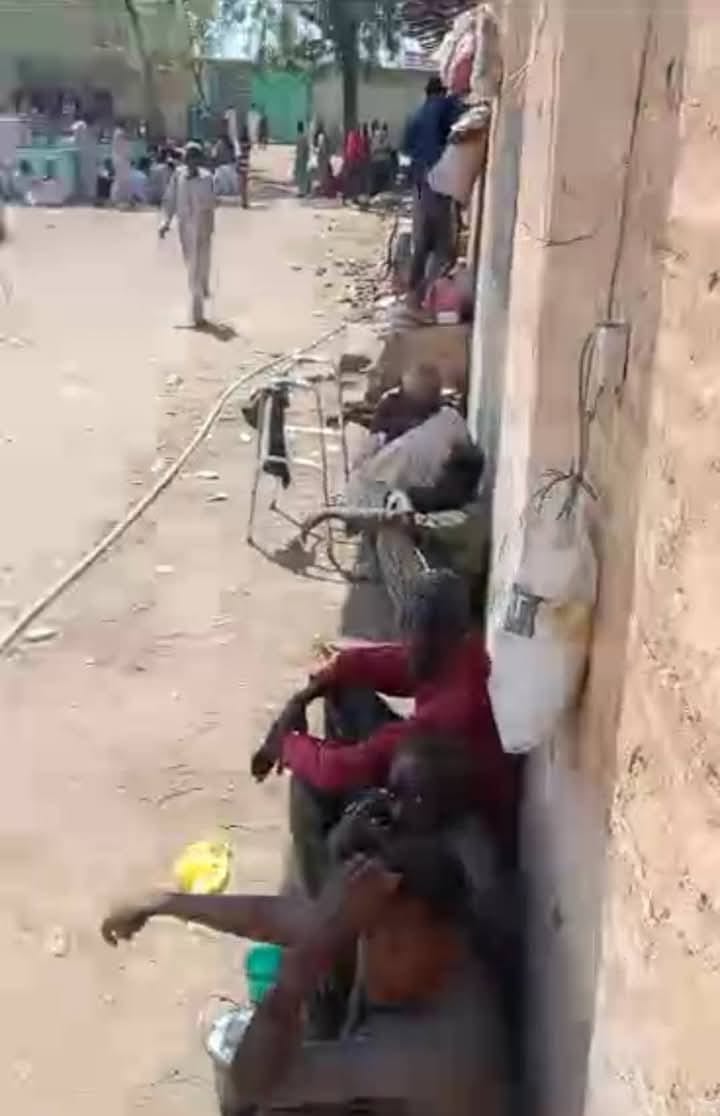
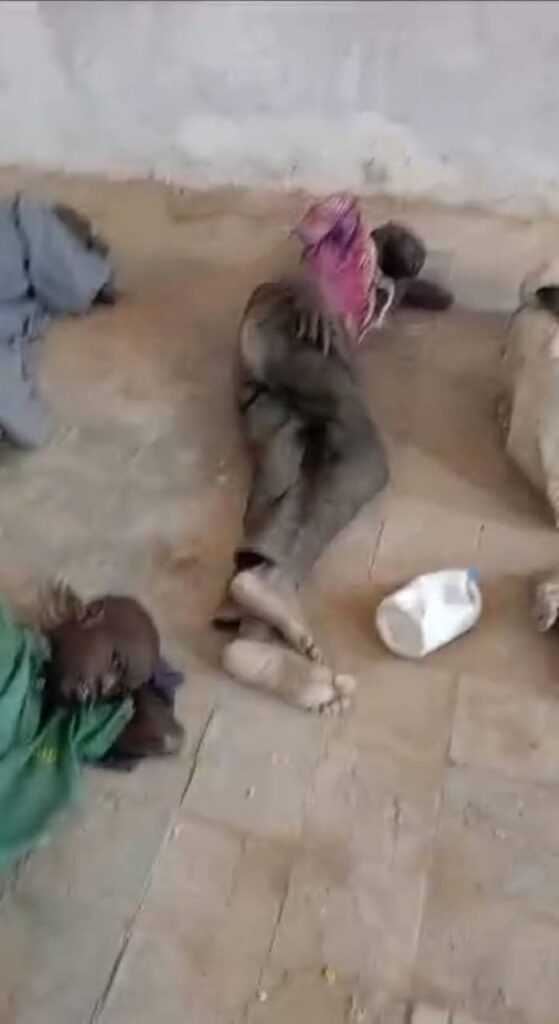
At approximately 5:00 PM, he was transferred to Al Madina Arab, where a civilian home adjacent to the Al Madina Arab Summary Court had been converted, according to his testimony, into a detention center. He mentioned finding nearly 200 detainees inside from the areas of Talha, Mahla, and Al Nu’aim, including approximately 20 women.

He reported spending three days in that detention facility, during which detainees were subjected to beatings and interrogation. He stated that the site was supervised by an officer holding the rank of Major, whom he referred to as Sulaiman Abooda.

According to the witness’s account, on the morning of one of the days of his detention, the officer brought all detainees out into the facility’s yard and selected three young men, approximately between the ages of 17 and 20, whom he stated were from western Sudan. He noted that one of them mentioned he was from the Al Mas’oudiya area and had been working to protect his village. According to the testimony, the three young men were shot in the head and chest in front of the other detainees, after which the remaining prisoners were threatened that the same fate might await them. He added that the detainees were later ordered to carry the victims’ bodies and that they were buried near the Al Madina Arab canal north of the market.

He also reported that on the night of the same day, at approximately 9:00 PM, six other detainees were brought out—three of whom he stated were from the Rizeigat tribe, two from another group he could not precisely identify, and one Hausa individual from 24 village. According to his testimony, they were taken to the canal area north of Al Madina Arab, where they were executed by firing squad and buried in a mass grave.

On January 15, 2024, according to the account, the witness was transferred to the Al Managil locality. He stated that in one of the detention sites there, he found a large number of detainees, which he estimated at around 2,000 people, and that the detention center was supervised by an army officer with the rank of Captain, whom he referred to as Ahmed.

The witness mentioned that a portion of the detainees were released while others remained in custody, noting that the majority of those who remained were, according to his observation, individuals from western Sudan. He also made a grave assertion that a large number of detainees died as a result of torture, hunger, and poor detention conditions, and that bodies were buried in mass graves in Al Managil The organization emphasizes that these claims, particularly the stated numbers regarding deaths and mass graves, require independent investigation and additional verification and are not adopted by the organization at this stage as a final count.

During his interrogation in Al Managil, the witness reported being asked about his tribe. When he stated that he was from the Tama tribe, he was asked questions related to specific individuals or groups, to which he responded that he was prepared to answer any accusation regarding a specific crime. He also mentioned being taken to an interrogation room where he was asked to reveal the locations of hidden gold in exchange for his release, noting that two individuals, whom he referred to as Adrob and Omer and stated belonged to Army Intelligence, participated in his interrogation. He confirmed that he denied any knowledge of gold and told the interrogators that he was an elderly man who knew nothing of those accusations.

The witness stated that he remained in detention for a long period and later asked a prosecutor about the reason for his arrest, to which he was told—according to his account—that his status was “preventive.” His statement indicates that he was moved between more than one detention centre before ultimately being released.

Legal Framework and Human Rights Classification

The facts contained in this testimony raise serious concerns regarding the occurrence of a series of grave violations of Sudanese law, international human rights law, and international humanitarian law. Arresting a person without a clear legal basis and detaining them for extended periods without charge or access to fundamental guarantees may constitute arbitrary arrest and detention.

Furthermore, beatings with hoses, blindfolding, threats, humiliation, and subjecting detainees to hunger and harsh conditions, if proven, may constitute torture or cruel, inhuman, or degrading treatment. International law strictly prohibits this type of treatment, both during armed conflicts and outside of them.

Regarding the execution of detainees by firing squad without judicial proceedings, as reported in the victim’s testimony, it represents—if established—an extrajudicial killing and a grave violation of the right to life’s. In the context of non-international armed conflict in Sudan, Common Article 3 of the four Geneva Conventions prohibits attacks on the life of persons taking no active part in hostilities, including murder, torture, and cruel treatment, as well as the passing of sentences and carrying out executions without previous judgment pronounced by a regularly constituted court offering essential judicial guarantees.

Acts of murder, torture, and cruel treatment against detainees may amount to war crimes if proven to be linked to the armed conflict and satisfy the necessary legal elements. Furthermore, if investigations reveal that killings, torture, or unlawful imprisonment were committed as part of a widespread or systematic attack directed against any civilian population, with knowledge of the attack, they may also fall under acts constituting crimes against humanity.

The statements regarding inquiries about tribal affiliation and the continued detention of individuals originating from western Sudan raise concerns regarding potential discrimination based on ethnic or regional origin. However, establishing the existence of a discriminatory policy or a systematic pattern requires gathering additional testimonies and evidence ancan notot be deduced solely from a single testimony.

At the national level, these facts warrant investigation into crimes stipulated under the Sudanese Penal Code of 1991, including murder, bodily harm, coercion, and offenses related to abuse of authority, alongside any specific national legislation criminalizing torture, war crimes, and crimes against humanity.

Conclusion and Recommendations

The Darfur Victims Support Organization (DVSO) considers that the testimony of (H m) o contains highly serious allegations regarding arbitrary detention, torture, looting of property, extrajudicial executions, and detention in facilities not legally designated for that purpose, alongside claims of widespread deaths and the burial of detainees in mass graves.

The organization stresses that the gravity of these statements necessitates preserving the testimony and associated evidence, conducting independent interviews with other survivors and victims’ families, and identifying and protecting detention sites and alleged mass graves from tampering, while avoiding the publication of final victim counts before completing the verification process.

The Darfur Victims Support Organization (DVSO) recommends the following:

1-Launching an independent, impartial, and effective investigation into the alleged arrests, torture, and executions in Bika, Al Madina Arab, and Al Managil, and identifying those responsible at both operational and command levels.

2-Taking urgent measures to identify individuals reported to have been executed or to have died in custody and informing their families of their fate.

3-Protecting burial sites and alleged mass graves from tampering until they can be examined by independent forensic experts.

4-Investigating the confiscation and looting of the victims’ property and restoring it or providing compensation once established.

5-Ensuring the right of the victim and other survivors to redress, reparations, compensation, and medical and psychological care.

6-Demanding that all military and security forces respect the prohibitions against torture, extrajudicial killings, and arbitrary detention, and ensure all detention places are subject to legal oversight.

7-Calling upon relevant national, regional, and international mechanisms, including UN mechanisms concerned with Sudan, to investigate these allegations and preserve evidence to ensure its availability for future accountability processes.

Documentary Note:

Certain details and figures contained in this report rely on the witness’s statement and remain subject to independent verification. The organization will update the information as additional reliable evidence and data become available.

مقالات ذات صلة

ترك الرد

من فضلك ادخل تعليقك
من فضلك ادخل اسمك هنا

الأكثر شهرة

احدث التعليقات