
Damazine:Alsudanianews
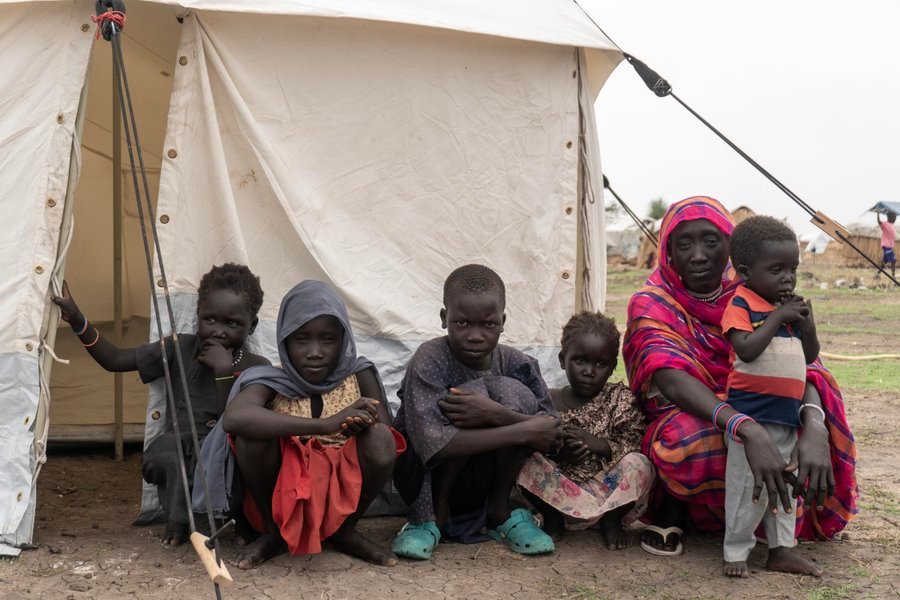
In the Al Karama displacement site, two populations share the same struggle – families who fled fighting in Kurmuk and Sudanese who crossed back from South Sudan hoping for peace at home.
Both arrived with almost nothing.Amira left Kurmuk locality in Blue Nile State on foot, in the dark, with her three children. “We heard the guns getting closer.
I took my children and walked before sunrise,” she says. It took days to reach Damazine.She is one of more than 73,000 people who fled Kurmuk, a strategic border town 150 km from Damazine, after successive waves of fighting since March 2026.
Each change of control brought fresh violence, looting and forced displacement.Through the Sudan Humanitarian Fund (SHF), UNHCR mobilized an emergency response. In Blue Nile, it reached over 3,000 families with shelter kits, 1,200 families with cash assistance, and 5,500 individuals with protection services, including case management and psychosocial support.Zainab, seven months pregnant, said: “With the money, I can decide. After weeks of having nothing, deciding something makes me feel like being a person again.”Alongside them, Al Karama hosts approximately 98,000 Sudanese returnees from South Sudan, who returned after food rations were cut and instability deepened.
Bathoul left Maban in March: “I thought Sudan would be better. In some ways, it is. In other ways, it is the same struggle, different ground.”Sudan remains the world’s largest displacement crisis with over 11 million internally displaced. The SHF, managed by OCHA, provided UNHCR with $15 million in 2026 to assist 233,000 displaced, returnee and war-affected people across Sudan.