
Sudanese Voices
Livestock markets in South Darfur occupy a pivotal position in the local economic cycle, not merely as places of trade, but as a key lifeline that broad segments of livestock breeders, traders, and local communities depend on to secure income and drive economic activity.
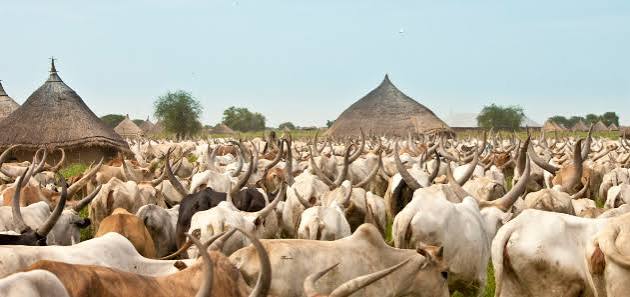
Within this context, the Sudanese Voices conducted a field tour with the Crop and Livestock Markets Department of South Darfur state to the Aboori livestock market in Rehaid al-Berdi locality, considered one of the important markets in the region, to assess the state of commercial activity, revenue and collection levels, alongside monitoring the challenges facing the market and those who work in it.
The Aboori market is located approximately 200 kilometers from Nyala city, making the regularity of its operations and the availability of effective administrative and financial mechanisms a matter of great importance, particularly given the long distances and difficulty of access to peripheral markets.
Between Commercial Activity and Strengthening Revenues
The field monitoring reveals the importance of reorganizing the relationship between commercial activity and public resources, so that collection procedures do not become an obstacle for traders and livestock breeders, while at the same time ensuring the state benefits from its resources in an organized and transparent manner.
This highlights a clear need to develop collection mechanisms, review administrative procedures, and strengthen financial oversight, in a way that ensures the smooth flow of buying and selling operations while preserving the rights of both traders and the state alike.
Improving market management is not only linked to increasing revenues, but is also directly connected to providing a stable trading environment that helps stimulate livestock activity and encourages producers and traders to deal through official markets.
The Voices of Traders and Livestock Breeders
The tour provided an opportunity to hear from traders, livestock breeders, and the native administration, and to identify the most prominent obstacles facing commercial activity in the market.
These challenges include administrative and financial aspects, alongside the need to improve the market’s general environment and simplify procedures in a way that matches the nature and scale of commercial activity.
Cooperation between local authorities, traders, the native administration, and relevant bodies remains a key factor in addressing these issues, particularly since markets in peripheral areas rely heavily on local understanding and coordination to sustain their activity.
Peripheral Markets and Their Role in the Local Economy
The Aboori market cannot be viewed in isolation from the network of markets spread across South Darfur; these markets represent interconnected links in an economy that relies heavily on livestock, agriculture, and local trade.
Preserving the stability of these markets means protecting the income sources of thousands of families, stimulating trade movement between localities, and generating resources that can help support public services.
From this standpoint, developing peripheral markets should go beyond the concept of revenue collection toward a comprehensive economic vision that includes improving infrastructure, organizing buying and selling operations, providing basic services, strengthening oversight, and opening more effective channels for producers to access markets.
Field Presence as a Gateway to Reform
The field visit reveals the importance of shifting from office-based administration to direct follow-up on market conditions, especially in areas far from the state’s center.
Assessing the actual reality of markets and listening to those who deal with them can help uncover shortcomings, develop more realistic solutions, and link revenues to improved services rather than viewing them merely as financial figures.
FAO data indicates that livestock has suffered significant damage since the outbreak of the war, including a decline in vaccination coverage, the spread of disease, shortages of pasture and water, and disrupted markets. In 2024, FAO and its partners were able to vaccinate approximately 2.8 million animals, benefiting nearly 558,000 pastoral and agro-pastoral households.
Regular field visits can also strengthen trust between the administration, traders, and local communities, and create space for dialogue on how to develop trade activity and address problems before they escalate.