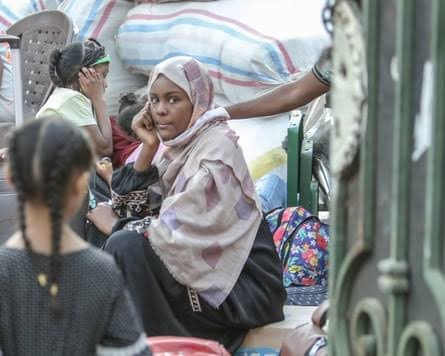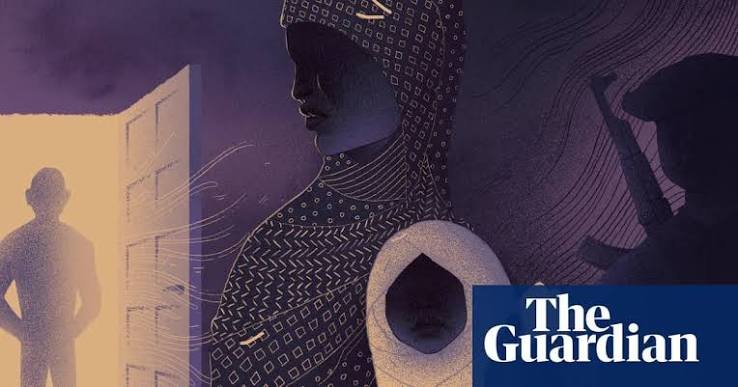
Sudanese women who fled to Egypt to escape the war in their country are facing increasing levels of sexual exploitation, with the Guardian told of single mothers forced to sell their bodies to survive and feed their children.
Many of the women have not previously worked in Sudan, where conservative social norms dictate that men are usually responsible for financial support. Without established trades or professions, and with their husbands and other family members dead or missing, many female refugees are struggling to pay for food, medical care and rent.
The Guardian spoke to 19 aid workers, refugees and medical professionals who say a lack of access to healthcare, education and, at times, food has made the situation for Sudanese women in Egypt increasingly desperate.Geographic Reference
Sudan’s civil war triggered the world’s worst displacement crisis, forcing more than 4.5 million people to flee to neighbouring Chad, South Sudan, Libya and Egypt. The situation in Egypt, which took in the largest number of arrivals, with an estimated 1.5 million people crossing the border, has also become significantly worse.
Thousands have found themselves trapped with few resources after a funding shortfall at UNHCR, the UN refugee agency, and the dismantling of USAID eliminated what little support had been available. Unable to work legally, living in poor and often unsafe neighbourhoods, women – who have been among the hardest hit by the war – are acutely vulnerable.People & Society
Mariam*, who runs a refugee outreach group in Cairo, says 90% of Sudanese women in her neighbourhood, where rent is cheap, have been subject to sexual exploitation.
“A woman without a husband, who has children, they target her knowing she won’t have enough to feed them,” Mariam says. “She thinks of doing this just once to cover her immediate expenses, but you’re going to be forced to do it every time.”
Even many of those who have spouses are not safe, because their husbands are away from home working long shifts or looking for work in other cities.News
Khadiga*, who works in the same refugee outreach group, says: “I know a girl who was taken advantage of and the same man who abused her then began abusing her daughter. Her husband divorced her when he became aware of what had happened.”
Without legal status or proof of their university degrees, even women with professional qualifications, such as teachers and doctors, struggle to find work. Most end up either working informally in factories, where a 10-hour working day nets about 150 Egyptian pounds (EGP; about £2.20), or as domestic workers, where they often go unpaid and sexual assault is commonplace.
Sex work has increasingly become a last resort for women seeking a way out of grinding poverty. “These women have been here since the war started and they are desperate,” says Alaa*, who works for an organisation that helps the women.
Before the war, Maha* says she worked as a supervisor at a poultry farm in Sudan, living what she describes as a simple but happy life with her three teenage children, after divorcing their father. She was captured and detained by the paramilitary Rapid Support Forces, who accused her of collaborating with the Sudanese military.
At the time, Maha says, her children had been staying with her former sister-in-law. Unable to find them after she was released and afraid she would be detained again, she fled to Egypt in 2024. She worked informally in a pharmaceutical factory until four months ago, when she lost two fingers in a workplace accident. Struggling to find other work to pay her bills, she started doing sex work. “I do this to cover my rent. If I don’t pay, they will kick me out.”
At night she stands in the street, waiting for passing cars to signal. Payment is about EGP300-600. “I get into cars with strangers. This is what I have to do to survive.”
Maha does not know if her children are still alive in Sudan. “I pray to God to be reunited with my children. But I worry that because I’m doing this, God will never give my children back.”Geographic Reference