
New York:Sudanianews
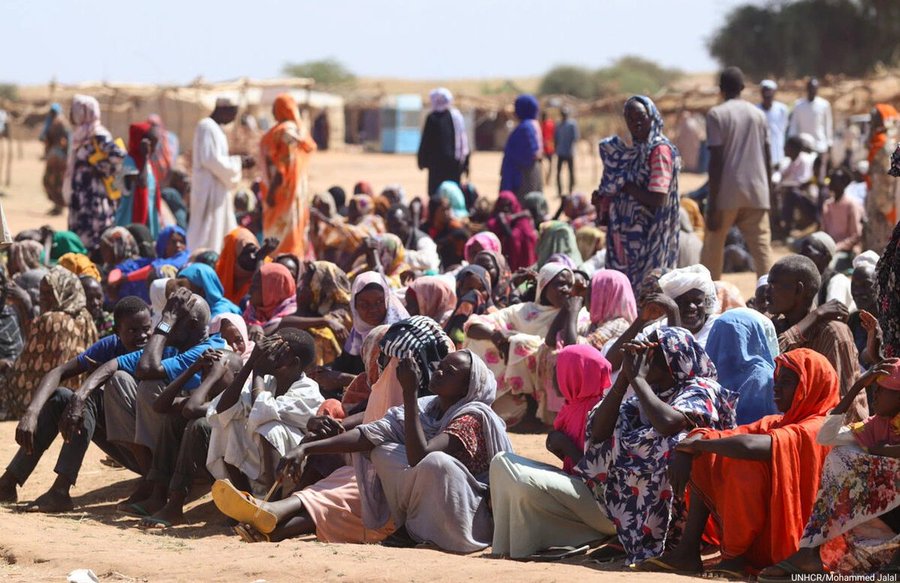
The Under-Secretary-General for Humanitarian Affairs and Emergency Relief Coordinator, Tom Fletcher, briefed the UN Security Council on 24 August 2026 on the humanitarian situation in Sudan, revealing that more than two-thirds of Sudan’s population are in desperate need of lifesaving support.Fletcher stated that 1,400 civilian deaths were recorded in the first half of this year, with more than 1,100 caused by drone strikes. In El Obeid, North Kordofan, drones are striking markets, fuel stations, and vital power and water infrastructure. Fighting has driven 15,000 families into the city since mid-July, placing even more pressure on displacement sites. More air strikes southwest of the city have taken place in the last 72 hours.
And it is also excellent to see the presence of [United States] Special Envoy [for Africa, Massad] Boulos with us there. I pay tribute to his work, and of course the work of [the Secretary-General’s] Personal Envoy [for Sudan, Pekka] Haavisto, and all those working for peace in Sudan.
More than two-thirds of the people of Sudan are in desperate need of lifesaving support. And as [Under-Secretary-General for Political and Peacebuilding Affairs, Rosemary] DiCarlo has described, 1,400 civilian deaths in the first half of this year – the vast majority, more than 1,100, caused by drone strikes.
In North Kordofan’s El Obeid, drones are striking markets, fuel stations, and vital power and water infrastructure. Fighting has driven 15,000 families into the city since mid-July, placing even more pressure on displacement sites and services already pushed to the breaking point. More air strikes southwest of city have taken place in the last 72 hours.
Humanitarians are seizing every opportunity to reach those in need. But we need protection for civilians. We need de-escalation.
In South Kordofan, Dilling and Kadugli have been among our key priorities. Both are now accessible, although road conditions are deteriorating as the rainy season takes hold.
Similar challenges are reported in the eastern part of South Kordofan, which also hosts significant numbers of displaced people. I am also worried about West Kordofan, which has been the epicenter of a recent cholera outbreak, and where our presence remains limited.
In the Nuba Mountains, in the southern part of South Kordofan, intensifying violence is severing communities from help in an area already plagued by chronic food insecurity. Our humanitarian facilities have been breached and looted, and many aid workers detained. Access remains disrupted by the fighting.
Further east, renewed fighting in Blue Nile has displaced thousands in the last two weeks, just as heavy rains batter the region. Blue Nile now hosts more than 370,000 displaced people.
Some have fled into Ethiopia – a stark reminder of how this war is spilling across Sudan’s borders. There have been renewed attacks on the border towns of Geissan and Kurmuk. Our Humanitarian Coordinator was able to visit the state capital, Ed Damazine, in late July.
Meanwhile, ground fighting and drone strikes continue to cripple humanitarian access in the north-western part of North Darfur State, while the rains make critical routes even more difficult to access.
Elsewhere in Darfur, hundreds of thousands who fled the atrocities in El Fasher last year remain in desperate need in places like Tawila – a reality I witnessed firsthand on my recent visit.
Mr. President,
Across Sudan, our teams navigate front lines, drone attacks, insecurity, and bureaucratic red tape.
Despite these challenges, humanitarians continue to push through. By mid-year, we had reached nearly 11 million people with at least one form of help, 52 per cent of our prioritized target. We are on track with our effort to reach 11.4 million people with food, but off track on education, health, shelter and water.
A key part of the Humanitarian Reset has been the prioritisation of people experiencing the highest levels of intersectoral need and responding in a more integrated way.
So, I want to thank the humanitarians involved in the collective, coordinated effort who have reached 1.7 million people in the catastrophic intersectoral severity category – what we call Category Five – exceeding the 1.5 million targeted, with particular progress in Tawila and Kadugli. We have expanded humanitarian air services and shifted more capacity from Port Sudan to Khartoum, bringing our operations closer to those we serve. We have removed duplication and bureaucracy.
I am also pleased to report that we have made real, sustained progress, since I last briefed you, in reducing bureaucratic obstacles to our operations.
I thank all those involved. I thank the Sudanese authorities too and the Government of Chad for keeping the crucial Adre crossing open, enabling us to reach millions across Darfur. We will continue to work hard with the authorities to streamline bureaucracy and increase access throughout Sudan.
The challenges remain immense, but we are staying. And we are delivering.
Mr. President,
We were heartened by the pledges at the Berlin Conference in April and we are grateful to the donors backing the coordinated response, including through the Sudan Humanitarian Fund. Our top ten donors are the US, with almost half of the funding, the EU, Africa Development Bank, UK, Canada, Germany, Netherlands, Switzerland, France and Norway.
But two thirds of the way through the year, we have received just over 40 per cent of the $2.87 billion required to our hyper-prioritized plan, focused exclusively on the most urgent, life-saving work.
Funding for the Regional Refugee Response Plan is even lower – only 17 per cent of the $1.59 billion needed to support seven neighbouring countries has been met.
Refugees and those displaced inside Sudan are also being squeezed by these shortfalls. Despite immense pressure, Sudan continues to keep its doors open to those seeking safety.
Mr President,
I usually end these briefings with three asks: uphold international humanitarian law, fund the response, and help end the conflict.
But today I won’t because this Council has heard those asks again and again.
Instead, the ask is that we not have another meeting where the Council simply describes the problem.
Sudan does not suffer from a lack of analysis. It suffers from a lack of action.
The people of Sudan need food, water and medicine. Yet the world sends drones, weapons and mercenaries.
The people of Sudan need sustained, courageous diplomacy. Yet the world is too often indifferent and distracted.
The people of Sudan need peace and dignity. Yet others use Sudan’s land and people as pieces in a regional struggle for power, gold and pride.
This Council is not powerless. The international community is not powerless. The tragedy of Sudan is not that we do not know what to do. It is that we have not yet found the will to do it.