
Policy Brief by Zaelnoon Suliman, Progress Center for Policies
Introduction:
On 19 April 2026, Bill Essayli, First Assistant United States Attorney for the Central District of California, announced the arrest of Iranian national Shamim Mafi at Los Angeles International Airport. She was charged with brokering the sale of drones, bombs, detonator valves, and millions of rounds of Iranian ammunition to the Sudanese Armed Forces. This paper argues that the arrest is not an isolated incident but part of a broader context revealing a strategic shift in Iranian–Sudanese relations, with profound implications for regional security in the Red Sea and the Horn of Africa.
Key Facts
Shamim Mafi (44) resides in Woodland Hills, California, and has held lawful permanent residency in the United States since 2016.
She established a company in the Sultanate of Oman under the name “Atlas International Business,” used as a front to facilitate arms and ammunition deals.
The company received payments exceeding seven million dollars during 2025 alone. The indictment also includes her role in a separate transaction involving 55,000 detonator valves to Sudan’s Ministry of Defence, for which she submitted a letter of intent to the Islamic Revolutionary Guard Corps to purchase the valves.
On 16 March 2026, Secretary of State Marco Rubio signed a designation classifying the Muslim Brotherhood in Sudan as a Foreign Terrorist Organisation. The State Department filed the designation in the Federal Register citing the group’s undermining of conflict resolution efforts in Sudan, with many of its fighters having received training and support from the IRGC.
On 12 September 2025, the Office of Foreign Assets Control sanctioned Jibril Ibrahim Mohammed Fadil, chairman of the Justice and Equality Movement, and the Al-Bara’ ibn Malik Battalion for their involvement in Sudan’s civil war and their ties to Iran.
A report by the Horn Review centre in Addis Ababa revealed the existence of an organised supply network moving weapons from Sudan — via Port Sudan and Suakin — to the Houthis in Yemen through Eritrea.
Analysis
I. The Strategic Dimensions of Iranian Engagement with Sudan
The Iranian–Sudanese relationship is not limited to arms transactions; it extends to a long-term strategic project. Since the resumption of diplomatic relations between the two countries in October 2023, following a 32-year rupture, Tehran has pursued a systematic policy of consolidating its presence in Sudan.
This presence serves multiple Iranian objectives:
-Securing a foothold on the Red Sea. Sudan’s Red Sea coastline offers Iran a prime opportunity to enhance its military and intelligence presence along one of the world’s most vital waterways. Tehran seeks to transform Sudan’s civil war into a strategic opportunity, gradually turning the country into a rear base for Iranian operations in the Horn of Africa and the Red Sea.
-Completing the encirclement of the Red Sea. Sudan, alongside the Houthis in Yemen, forms one jaw of a pincer pressing on the critical maritime corridor. The Houthis control the Bab al-Mandab Strait to the south, while Iran — through its influence in Sudan — can threaten navigation from the north. This strategic positioning risks turning the Red Sea into a sphere of Iranian influence threatening global trade and energy supplies.
-A gateway into sub-Saharan Africa. Sudan represents Iran’s bridge to the Sahel and West Africa, where anti-Western sentiment is rising in countries such as Mali, Niger, Burkina Faso, and Chad. Through its drone expertise, Iran can supply these states with relatively low-cost military capabilities, thereby expanding its continental influence.
II. Sudan’s War Becoming an Iranian Instrument
Available evidence suggests that Iranian support in the Sudanese war has moved well beyond conventional military assistance toward a far deeper relationship. There are growing American concerns that the Sudanese army may be on a trajectory toward becoming an Iran-linked force analogous to Iraq’s Popular Mobilisation Forces or Yemen’s Houthis.
This shift is visible in several respects:
-Ideological fusion. The Al-Bara’ ibn Malik Battalion — affiliated with Sudan’s Muslim Brotherhood and trained by the IRGC — has become a key actor fighting alongside the Sudanese army. This points to a strategic convergence between Iran’s expansionist project and Sudan’s radical Sunni Islamist networks, transcending the traditional sectarian divide in favour of shared geopolitical objectives.
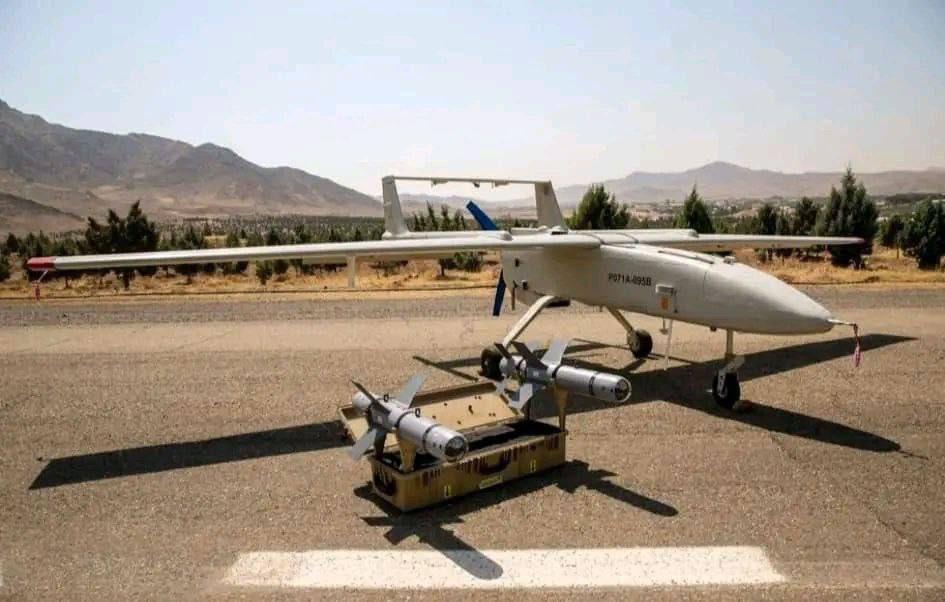
-Iranian military expertise. Combat footage has documented Iranian drones flying over Khartoum and Iranian military trainers working with Sudanese recruits. This direct presence reflects the depth of Iranian involvement, which has progressed from weapons supply to the transfer of know-how and technology.
-Industrial infrastructure. Sudan has prior experience of defence-industrial cooperation with Iran, most notably through the Yarmouk Industrial Complex. Even a partial reactivation of those capabilities could transform Sudan into a hub for assembling and producing Iranian weapons on African soil.

III. Regional and International Dimensions
The Gulf position. The Arab Gulf states, particularly Saudi Arabia and the UAE, are acutely aware of the threat posed by Iranian influence in Sudan. While Riyadh and Abu Dhabi have traditionally competed in the Sudanese arena, the shared Iranian threat may drive greater coordination between them. Yet this coordination faces obstacles: the UAE stands accused of supporting the rival Rapid Support Forces — accusations Abu Dhabi consistently denies.
The American position. As the crisis in the Strait of Hormuz deepens in the context of the Iran–US confrontation in the Middle East, the Red Sea’s importance as a critical alternative route grows. This will intensify Washington’s attention to the Sudanese file, which has remained peripheral for years. The United States fears Sudan could become a rear base from which American and Israeli interests in the region are threatened.
The European position. Europe faces direct security and economic consequences from the Sudanese conflict — above all in irregular migration and terrorism. However, the absence of a unified European strategy toward Africa limits the European Union’s capacity to play a meaningful role in addressing the crisis.
Conclusions
The arrest of Shamim Mafi is not merely a transient criminal case; it is a clear indicator of the systematic deepening of the Iranian–Sudanese relationship, encompassing sophisticated weapons, financing, and complex smuggling networks.
Iran seeks to transform Sudan into an advanced military and intelligence base on the Red Sea, functioning in a role analogous to that of the Houthis in Yemen or the Popular Mobilisation Forces in Iraq — granting Tehran the capacity to threaten international navigation and upend regional balances.
Iranian influence in Sudan constitutes a direct existential threat to the Arab Gulf states, not only because of the danger to Red Sea navigation, but also because it is becoming a platform for destabilising the entire region. This demands a unified Gulf response that rises above bilateral disputes.
In the medium term, Sudan’s war is likely to deepen into a more serious international crisis without arriving at any genuine resolution, with Sudan becoming a bargaining chip in larger negotiations among regional and global powers — meaning continued human suffering and an expanding theatre of conflict.
Any genuine settlement of the Sudanese war requires broad regional and international consensus, which appears distant given the current climate of escalation and polarisation. It is a complex geopolitical game whose price is paid by the Sudanese people