
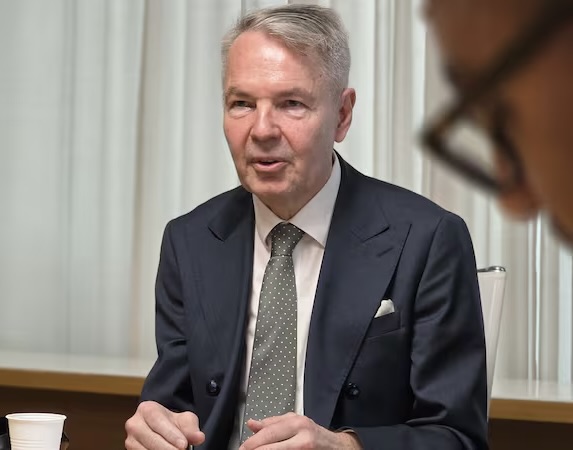
The UN Secretary General’s personal envoy for Sudan has said the time had come to move from military rule to civilian governance and added that the UN is now focused on strengthening civil society to prepare it for a bigger future role.
In a briefing in Helsinki with media outlets, Pekka Haavisto explained that there now appears to be a growing consensus among the main players in favour of civilian governance. This would be a departure from allowing the head of the Sudan Armed Forces Gen Abdel Fattah Al Burhan from imposing himself as the defacto ruler of Sudan and controlling the state’s resources.
“One issue that different parties seem to be quite united on is that there should be a civilian regime in Sudan,” he said. “The period of military regime should be over and there should be some kind of transition from military rule to civilian rule.
The war that has killed thousands and displaced millions is viewed widely as a struggle for domination of the impoverished but resource-rich nation between army chief Gen Abdel Fattah Al Burhan and RSF commander Gen Mohamed Dagalo, although the pair tirelessly claim to be fighting to bring stability and unity to Sudan.
Repeated bids by regional and international powers to end the conflict have failed, with Gen Al Burhan adamant he will fight on until the RSF is vanquished, or surrenders. Gen Dagalo, on the other hand, has shown willingness to negotiate, although his motive is widely suspected to be a desire to see his paramilitary force accorded international legitimacy.
Both sides have committed atrocities and are accused of severe crimes.
Mr Haavisto stated the UN is working to strengthen civilian and political groups, alongside mediation efforts between the warring parties.
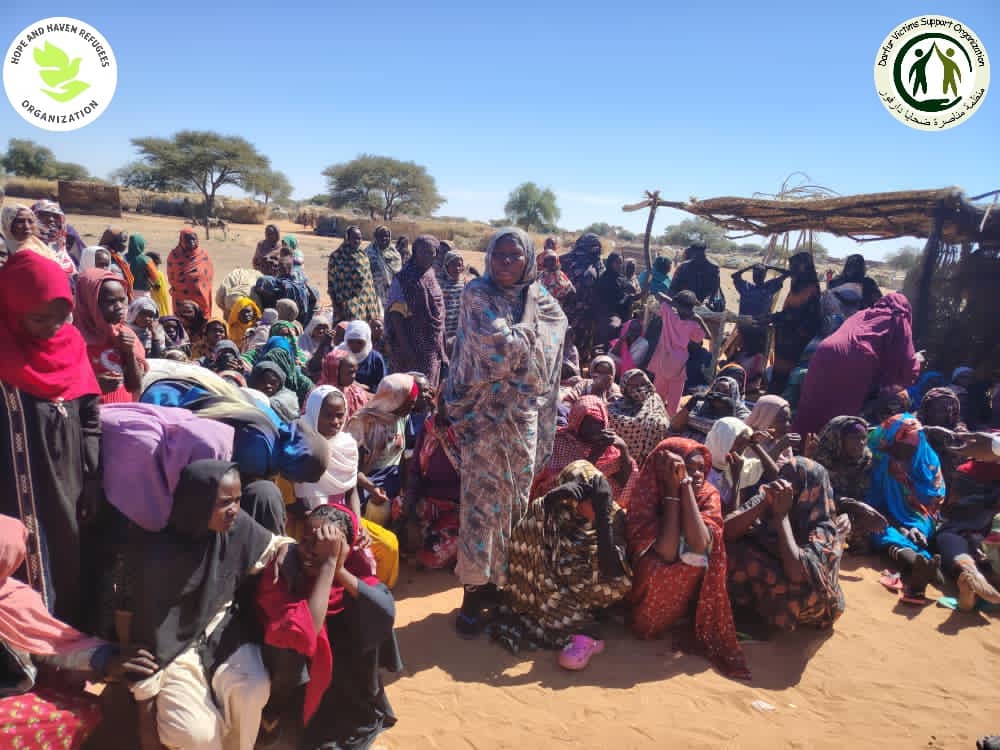
“For that reason, we need a stronger civilian component, and that’s what we are trying to build through these meetings with civil society and political parties of Sudan,” he added, highlighting a Berlin meeting last month and another taking place next month.
“I have been talking quite directly on this goal of moving towards a civilian government,” said the diplomat of his recent conversations with the leaders of SAF and RSF.
He acknowledged, however, that major obstacles remain, particularly around ceasefire guarantees and the “day-after” scenario, following any truce. “The question is what comes after the humanitarian truce, what kind of ceasefire, what kind of monitoring.”
Still, Mr Haavisto said compromise among Sudan’s fragmented political actors is essential if the country is to emerge from war. “You have to learn how to rule the country together. You have to learn the skill of making compromises. Sometimes compromise is important to get the bigger goal accepted.”
Sudan’s military leadership has been facing mounting scrutiny after announcing plans to integrate Islamist militias into the SAF. The movement that led Sudan’s 2019 uprising appears to be backing prolonged military rule as it seeks a political comeback, having deployed fighters in the civil war.
The US Department of State announced it had designated the Sudanese Muslim Brotherhood a terrorist organisation due to its role in widespread violence against civilians during the current war. Shortly after the decision, Gen Al Burhan named his second-in-command, Gen Yasser Al Atta, as his chief of staff. Gen Al Atta is known as a supporter of Islamist-aligned fighters who have joined the army in its war against the RSF.
Mr Haavisto said the issue of excluding the Muslim Brotherhood from any future transitional arrangement in Sudan is being factored into ongoing ceasefire and political negotiations.
“These kind of red lines that countries are drawing, for example, that the Muslim Brotherhood should not be in the coming government of the transition process and so forth, we take them into account.”
Expanding the Quad
Mr Haavisto also revealed that discussions on widening the influential Quad group took place recently, but stressed that co-ordination with other international players remains effective.
“I was recently in Riyadh and Abu Dhabi, [and] the issue of widening the Quad came up in many discussions,” Mr Haavisto told The National in response to a question on the issue. Such a move would mean other influential actors could exert pressure to end the fighting.
“What I’m saying to Quad members is that ‘you are the ones who can guarantee, in many ways, the security of Sudan also for the future,’” said the Finnish diplomat. Other “powers” should be involved in the peace process, mainly the UN, he added.
The Quad was established in 2023 as a diplomatic group bringing together the US, Saudi Arabia, the UAE and Egypt to co-ordinate efforts aimed at ending the civil war in Sudan. The group of four emerged alongside the Jeddah mediation track launched by Washington and Riyadh shortly after fighting erupted between the Sudanese Armed Forces and the Rapid Support Forces (RSF)