
Policy Assessment by Zaelnoon Suliman — African Affairs Unit, Progress Center for Policies
Introduction:
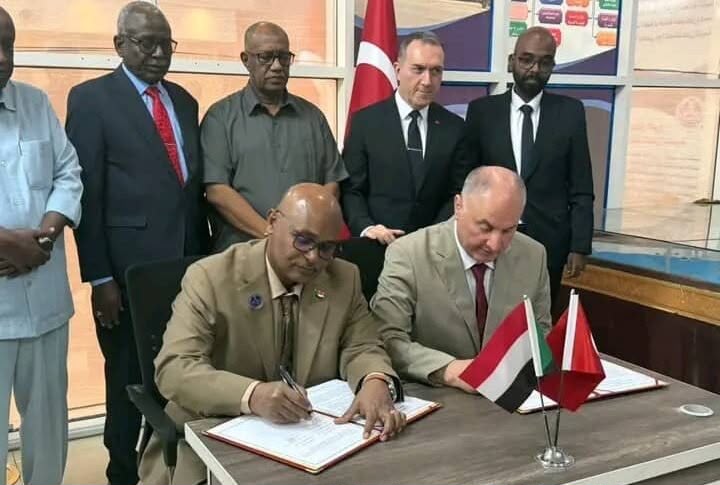
On July 15, 2026, the Sudanese Sea Ports Corporation signed a memorandum of understanding with the Turkish company “Argaz” to establish Sudan’s first dedicated berth for receiving and storing gas at Port Sawakin, with a storage capacity of around 28,000 cubic meters and the capability to service three vessels simultaneously, under a build-operate-then-transfer scheme.
Although the project remains at the memorandum-of-understanding stage, its timing, location, and the nature of the implementing partner give it a significance that exceeds its economic scale: it brings the question of Turkey’s presence in Sawakin back to the forefront — but this time through limited civilian infrastructure, rather than through a broad political-historical project like the 2017 experience, which at the time raised regional fears of a Turkish military foothold.
In the Data:
The financial value of the project has not been announced, nor has the duration of the operating concession granted to Argaz — consistent with the agreement remaining in its initial stage. It comes as an extension of prior talks between the two sides on gas storage, floating facilities, and ship maintenance, suggesting it is part of a broader package of cooperation. The choice of the build-operate model reflects Khartoum’s need for external financing that does not burden the general budget amid the pressures of war.
Turkey had previously entered Sawakin through the 2017 agreements during Erdoğan’s visit, with a total value of approximately $650 million, which raised fears that the port could turn into a military foothold despite being officially presented as a tourism-historical project. The new agreement comes after Khartoum’s cancellation, in November 2024, of a $6 billion Emirati agreement for Abu Amama Port, against the backdrop of Sudanese accusations that Abu Dhabi was supporting the Rapid Support Forces — accusations the UAE denies.
Reading and Analysis:
The gas berth does not represent a full return by Turkey to the old Sawakin project, nor does it, at its current stage, indicate a decisive strategic shift in the balance of influence on the Red Sea. However, it reveals an adjustment in the Turkish approach — one based on a gradual return through specific economic and service sectors, rather than starting with massive projects carrying high political and sovereign symbolism.
The previous experience showed Ankara that a direct presence in Sawakin can provoke Egyptian and Gulf sensitivities, especially when talk of rehabilitating the port is linked to expectations of military or naval use. The new project therefore appears less ambitious in scale, but more realistic in terms of chances for implementation and acceptance, because it is tied to an actual Sudanese need to develop gas-receiving and storage facilities and improve port efficiency.
The energy gateway allows Turkey to present its presence as a commercial investment serving the Sudanese economy, while achieving indirect strategic gains. Operating an energy facility inside an important port grants the implementing company operational knowledge, institutional relationships, and a long-term presence that can later be expanded into storage, maintenance, and maritime transport services — without the need to announce a broad geopolitical project from the outset.
The Turkish move also benefits from the shift that has occurred in the map of Sudanese partnerships since the outbreak of the war. The crisis has weakened the state’s capacity to implement major projects and has strained its relations with some regional investors, particularly the UAE. This does not mean that influence is automatically shifting from Abu Dhabi to Ankara; the UAE’s economic relations with Sudan — especially in the gold, trade, and investment sectors — are too deep to be replaced by a limited Turkish project. But it does mean that the faltering of some Gulf projects has created political and economic space for other partners to enter.
The project is not disconnected from Turkey’s growing relations with the institutions running the areas under the control of the Sudanese army. The port lies within the area controlled by the Sudanese Armed Forces, and Turkey possesses an advanced defense-industry sector and maintains political and security ties with Khartoum. Nevertheless, the announced memorandum of understanding contains no indicators confirming a military function for the project; a distinction should therefore be made between the general security context of the relationship and the declared civilian nature of the berth.
The project indirectly touches on Red Sea energy security. Although the berth is primarily intended to serve Sudan’s needs, Sawakin’s location on the western coast of the Red Sea makes it part of the network of ports and facilities that affect the efficiency of trade movement and fuel supplies through the maritime corridor extending from Bab al-Mandab to the Suez Canal. The more facilities related to storage, reception, and maritime services increase, the greater the importance of the Sudanese coast within the regional supply-security system.
This is likely to prompt Saudi Arabia to monitor the project from the angle of the stability of the coast opposite its territory and the security of navigation and energy flows, rather than viewing it as a direct threat. Riyadh does not necessarily oppose Turkish civilian investments, but it will be concerned that economic projects not gradually turn into security or military arrangements that alter the balance on the western bank of the Red Sea.
Egypt, for its part, is likely to view any Turkish expansion in Sudanese ports with greater sensitivity, given the Red Sea’s connection to Suez Canal security, Egyptian-Sudanese relations, and the experience of Egyptian-Turkish rivalry over the past decade. However, the improvement in relations between Cairo and Ankara, along with the limited civilian nature of the project, may lead Egypt to monitor it rather than confront it — unless indicators emerge of a shift from commercial investment to a permanent military or security presence.
The project’s transition from a memorandum of understanding to an operating facility will remain contingent on several factors, chief among them continued financing, completion of legal procedures, availability of security guarantees, and the future course of the war and political settlement. Any future Sudanese government may also reconsider long-term contracts, especially if it deems them to have been concluded amid institutional dysfunction or the absence of national consensus on the management of ports and sovereign resources.
Conclusions:
-The memorandum reflects a shift in the Turkish approach from broad, politically sensitive projects to sectoral investments in energy and maritime services.
-The project, at its current scale, does not constitute a shift in the balance of influence in the Red Sea, but it grants Ankara an institutional foothold capable of future expansion.
-Turkey benefits from Sudan’s need for financing and the faltering of some Gulf partnerships, without coming close to competing with Chinese or Gulf presence.
-Riyadh will monitor the project from the angle of navigation security and regional stability, while Cairo will approach it with caution linked to Suez Canal security, unless military indicators emerge.
-There are as yet no indicators of a military dimension to the project; its current importance is economic and logistical, and its future expansion is contingent on the course of the war and the stability of power in Sudan.
Assessment: Turkey has not yet returned to the Red Sea in the full strategic sense, but it has begun testing a less confrontational path back through the gateway of energy and infrastructure.